

<?xml version="1.0" encoding="UTF-8"?>
<?xml-stylesheet type="text/xsl" href="/wp-content/themes/feed/atom.xsl"?>
<feed
        xmlns="http://www.w3.org/2005/Atom"
        xmlns:wwe="http://release.wwe.com/atom/1.0"
        xmlns:thr="http://purl.org/syndication/thread/1.0"
        xmlns:taxo="http://purl.org/rss/1.0/modules/taxonomy/"
        xml:lang="en-US"
        xml:base="https://www.mktlawoffice.com/wp-atom.php"
	>
    <title type="text">MKT Law</title>
    <subtitle type="text"></subtitle>

    <updated>2026-07-28T06:19:52Z</updated>

    <link rel="alternate" type="text/html" href="https://www.mktlawoffice.com" />
    <id>https://www.mktlawoffice.com/feed/atom/</id>
    <link rel="self" type="application/atom+xml" href="https://www.mktlawoffice.com/feed/atom/?forceByPassCache=0.4518270670026757" />
	
	<generator uri="https://wordpress.org/" version="6.9.5">WordPress</generator>
<icon>/wp-content/uploads/sites/1604859/2025/01/cropped-MKT-OG-32x32.png</icon>
        <entry>
            <author>
									                    <name>On Behalf of MKT Law</name>
				            </author>
            <title type="html"><![CDATA[Cooking the Books: Red Flags Your Business Partner Is Skimming Cash]]></title>
            <link rel="alternate" type="text/html" href="https://www.mktlawoffice.com/blog/2026/07/cooking-the-books-red-flags-your-business-partner-is-skimming-cash/" />
            <id>https://www.mktlawoffice.com/?p=46957</id>
            <updated>2026-07-28T06:19:52Z</updated>
            <published>2026-07-28T06:19:52Z</published>
					<taxo:topics><![CDATA[-]]></taxo:topics>
            <summary type="html"><![CDATA[You built this business together, but the numbers no longer add up. Profits keep shrinking while sales look steady, and your partner brushes off every question. If that nagging doubt keeps growing, these warning signs can help you decide what to do next. Financial red flags to watch for Skimming often hides in plain sight. Small oddities in the books…]]></summary>
			                <content type="html" xml:base="https://www.mktlawoffice.com/blog/2026/07/cooking-the-books-red-flags-your-business-partner-is-skimming-cash/"><![CDATA[<span style="font-weight: 400;">You built this business together, but the numbers no longer add up. Profits keep shrinking while sales look steady, and your partner brushes off every question. If that nagging doubt keeps growing, these warning signs can help you decide what to do next.</span>
<h2><span style="font-weight: 400;">Financial red flags to watch for</span></h2>
<span style="font-weight: 400;">Skimming often hides in plain sight. Small oddities in the books can point to a much larger problem. Watch for these common signs:</span>
<ul>
 	<li style="font-weight: 400;" aria-level="1"><b>Cash shortfalls:</b><span style="font-weight: 400;"> Bank deposits do not match daily receipts or register totals.</span></li>
 	<li style="font-weight: 400;" aria-level="1"><b>Delayed records:</b><span style="font-weight: 400;"> Financial statements consistently run weeks behind schedule.</span></li>
 	<li style="font-weight: 400;" aria-level="1"><b>Inflated expenses:</b><span style="font-weight: 400;"> Vendor payments or petty cash withdrawals spike without invoices.</span></li>
 	<li style="font-weight: 400;" aria-level="1"><b>Personal spending:</b><span style="font-weight: 400;"> Groceries, travel or family bills appear as business costs.</span></li>
 	<li style="font-weight: 400;" aria-level="1"><b>Uneven distributions:</b><span style="font-weight: 400;"> Your partner takes more money out than your ownership split allows.</span></li>
</ul>
<span style="font-weight: 400;">One of these alone may have an innocent explanation. A repeated pattern deserves a closer look.</span>
<h2><span style="font-weight: 400;">Behavioral warning signs</span></h2>
<span style="font-weight: 400;">Numbers are not the only clue. A partner who becomes secretive about finances may be hiding something. Refusing to grant access to bank accounts or accounting software is a serious concern. So is an angry or evasive reaction to routine questions about the budget. Resistance to outside audits or independent reviews can also signal trouble.</span>
<h2><span style="font-weight: 400;">Your right to see the books</span></h2>
<span style="font-weight: 400;">Minnesota partners owe each other duties of loyalty and care under </span><a href="https://www.revisor.mn.gov/statutes/cite/323A.0404" target="_blank" rel="noopener noreferrer" data-wpel-link="external"><span style="font-weight: 400;">Minn. Stat. § 323A.0404</span></a><span style="font-weight: 400;">. A partner who skims cash or conceals records may breach that fiduciary duty. The law treats company profits as partnership property, not personal funds. Your partner must hold business assets as a trustee for the partnership. If your partner refuses to share bank statements or accounting access, that refusal itself can be a warning sign.</span>
<h2><span style="font-weight: 400;">How forensic accounting can help</span></h2>
<span style="font-weight: 400;">A forensic accountant can trace missing deposits and reconstruct altered records. They compare what the books say against what actually moved through the accounts. Their findings can become key evidence if the dispute turns into litigation. Courts may award damages when the records show a partner diverted company money. Documenting everything before you confront your partner can protect your position.</span>
<h2><span style="font-weight: 400;">Protecting your stake in the business</span></h2>
<span style="font-weight: 400;">Skimming rarely stops on its own. The financial red flags, behavioral changes, your inspection rights under Minnesota law and forensic analysis all work together. They can turn a vague suspicion into documented proof. Acting early matters because delays can let losses grow and evidence disappear. </span>

<span style="font-weight: 400;">Learning how a business litigation attorney approaches partner disputes can help you </span><a href="https://www.mktlawoffice.com/why-hire-me/" target="_blank" rel="noopener" data-wpel-link="internal"><span style="font-weight: 400;">weigh your options</span></a><span style="font-weight: 400;">. If your partner contests the numbers or the dispute becomes more complicated, a lawyer's input may help.</span>]]></content>
						        </entry>
	        <entry>
            <author>
									                    <name>On Behalf of MKT Law</name>
				            </author>
            <title type="html"><![CDATA[Hidden risks in AI-generated work from vendors]]></title>
            <link rel="alternate" type="text/html" href="https://www.mktlawoffice.com/blog/2026/05/hidden-risks-in-ai-generated-work-from-vendors/" />
            <id>https://www.mktlawoffice.com/?p=46956</id>
            <updated>2026-05-14T12:48:38Z</updated>
            <published>2026-05-14T12:45:53Z</published>
					<taxo:topics><![CDATA[-]]></taxo:topics>
            <summary type="html"><![CDATA[Businesses use a variety of sources to get the things needed for business. For many, this includes hiring vendors to handle building websites, apps, automations, marketing tools and software. Historically, these tasks were done by a person, but many of them are shifting to at least partial use of artificial intelligence (AI) to handle coding and other technical aspects of…]]></summary>
			                <content type="html" xml:base="https://www.mktlawoffice.com/blog/2026/05/hidden-risks-in-ai-generated-work-from-vendors/"><![CDATA[<span style="font-weight: 400;">Businesses use a variety of sources to get the things needed for business. For many, this includes hiring vendors to handle building websites, apps, automations, marketing tools and software. Historically, these tasks were done by a person, but many of them are shifting to at least partial use of artificial intelligence (AI) to handle coding and other technical aspects of the end product. </span>

<span style="font-weight: 400;">The business may assume that it owns everything that it pays for; however, that might not be the case. </span><a href="https://www.dentons.com/en/insights/alerts/2024/july/31/key-considerations-for-evaluating-vendor-contracts-involving-ai" target="_blank" rel="noopener noreferrer" data-wpel-link="external"><span style="font-weight: 400;">AI-assisted work</span></a><span style="font-weight: 400;"> can involve using training data, third-party tools, existing code libraries and prompts. Even if the vendor modifies those, the company may not own them. </span>

<span style="font-weight: 400;">Any business that has vendors creating code for anything needs to have a solid contract. This should include information about the transfer of ownership for the final deliverables. Without the proper information, the business may face limits when changing, using, selling or enforcing the rights to the produce. </span>
<h2><span style="font-weight: 400;">Contract language matters when AI is involved</span></h2>
<span style="font-weight: 400;">One of the most important things to include in the contract with the vendor is a detailed definition of the final deliverables. The contract should make it clear if AI or any third-party components were used in the development of the code. This should also include information about whether the business receives full ownership, a license or a right to limited use. </span>

<span style="font-weight: 400;">When AI tools are used, there is another issue that may come up. If a vendor uses the same AI-generated framework for multiple clients, it’s possible that a custom product won’t be exclusive. Ultimately, this could lead to claims that AI-assisted code is infringing on intellectual property rights, so that possibility should be covered in the contract. </span>

<span style="font-weight: 400;">Contracts that include AI-assisted components should clearly state which party is liable for defense costs, replacement work and other damages if an intellectual property claim is made due to the AI-assisted components. </span>

<span style="font-weight: 400;">While AI can help vendors work faster, which will get a company the code or product faster, this isn’t always beneficial. Having a clear contract can </span><a href="/business-litigation/intellectual-property" target="_blank" rel="noopener" data-wpel-link="internal"><span style="font-weight: 400;">reduce the risk of the company facing legal claims</span></a><span style="font-weight: 400;"> down the road because of the product the vendor provided to the company. Working with someone who’s familiar with the evolution of AI in legal matters may be beneficial in these cases.</span>]]></content>
						        </entry>
	        <entry>
            <author>
									                    <name>On Behalf of MKT Law</name>
				            </author>
            <title type="html"><![CDATA[Internal chats can play a role in business litigation]]></title>
            <link rel="alternate" type="text/html" href="https://www.mktlawoffice.com/blog/2026/05/internal-chats-can-play-a-role-in-business-litigation/" />
            <id>https://www.mktlawoffice.com/?p=46955</id>
            <updated>2026-05-14T11:55:53Z</updated>
            <published>2026-05-14T11:55:53Z</published>
					<taxo:topics><![CDATA[-]]></taxo:topics>
            <summary type="html"><![CDATA[For many companies, facing legal challenges is a fairly common occurrence. One of the most important parts of a legal claim is often the evidence that each side has. Some businesses focus largely on traditional evidence, such as contracts, letters, emails and invoices. However, those aren’t the only pieces of evidence that can have a major impact on these cases. …]]></summary>
			                <content type="html" xml:base="https://www.mktlawoffice.com/blog/2026/05/internal-chats-can-play-a-role-in-business-litigation/"><![CDATA[<span style="font-weight: 400">For many companies, facing legal challenges is a fairly common occurrence. One of the most important parts of a legal claim is often the evidence that each side has. Some businesses focus largely on traditional evidence, such as contracts, letters, emails and invoices. However, those aren’t the only pieces of evidence that can have a major impact on these cases. </span>

<span style="font-weight: 400">Many companies are finding that </span><a href="https://cloudnine.com/ediscoverydaily/when-chat-becomes-evidence-legal-cases-involving-slack-microsoft-teams-messaging-apps/" target="_blank" rel="noopener noreferrer" data-wpel-link="external"><span style="font-weight: 400">internal messages</span></a><span style="font-weight: 400">, such as Slack, Microsoft Teams, text threads and other platforms are now coming into these legal battles. They’re often valuable because they provide an inside look at how employees discussed product delays, contract issues, workplace conflicts or customer complaints.                               </span>
<h2><span style="font-weight: 400">Internal chats are rather risky</span></h2>
<span style="font-weight: 400">Many employees don't realize how risky the internal chats can be. They often write short, sarcastic or emotional messages that lack context. When it comes to litigation, even a comment that's meant as a joke may actually look careless if it's read months later in court. The message about covering the mistake could be interpreted as evidence of knowledge or intent, even if that's not what the sender meant.</span>

<span style="font-weight: 400">It's important for companies to recognize that discovery can include electronically stored information. That information can cover chat logs, shared channels, phone messages, direct messages and attachments that are exchanged through platforms the workplace uses. Anything that's relevant to a dispute and not protected by privilege or another rule can be searched, preserved and used in court.</span>

<span style="font-weight: 400">Some people believe that chat systems are more private than other options, like emails. However, many platforms store messages for long periods of time, which may be dependent upon company settings. Even deleted messages may remain available for legal cases because of backups, exports and retention tools.</span>

<span style="font-weight: 400">Internal chat is a useful option for quick chats, but it’s critical that employees always remember that these chats can be used as evidence, oftentimes even the messages that were deleted. They must use sound judgment, a professional tone and careful wording to prevent potential issues from occurring. </span>

<span style="font-weight: 400">When internal chats become </span><a href="/business-litigation" target="_blank" rel="noopener" data-wpel-link="internal"><span style="font-weight: 400">part of a legal matter</span></a><span style="font-weight: 400">, the company may find itself trying to explain underlying meanings and combat how the other party construes the information. It may be beneficial for these companies to work with someone familiar with these matters so they can explore their options, and it may help to address the issue of internal chats by setting clear rules for this communication method before an issue creeps up.</span>

&nbsp;]]></content>
						        </entry>
	        <entry>
            <author>
									                    <name>On Behalf of MKT Law</name>
				            </author>
            <title type="html"><![CDATA[Don&#8217;t Discount Valuations!]]></title>
            <link rel="alternate" type="text/html" href="https://www.mktlawoffice.com/blog/2026/02/the-buy-out-battle-3-common-ways-partnership-valuations-go-wrong/" />
            <id>https://www.mktlawoffice.com/?p=46951</id>
            <updated>2026-02-10T14:01:34Z</updated>
            <published>2026-02-02T07:25:32Z</published>
					<taxo:topics><![CDATA[-]]></taxo:topics>
            <summary type="html"><![CDATA[Business breakups often lead to fierce disputes over value. In closely held companies, a buy-out may look simple on paper, but in practice, the numbers can tell a very different story. For Minneapolis shareholders, even small valuation choices can lead to massive financial losses. Understanding where these disputes start is a prerequisite to defending your interest and navigating the complex…]]></summary>
			                <content type="html" xml:base="https://www.mktlawoffice.com/blog/2026/02/the-buy-out-battle-3-common-ways-partnership-valuations-go-wrong/"><![CDATA[<p data-path-to-node="3"><img class=" wp-image-46954 aligncenter" src="/wp-content/uploads/sites/1604859/2026/02/mnlaw-300x131.jpg" alt="" width="408" height="178" /></p>
<p data-path-to-node="3">Business breakups often lead to fierce disputes over value. In closely held companies, a buy-out may look simple on paper, but in practice, the numbers can tell a very different story. For Minneapolis shareholders, even small valuation choices can lead to massive financial losses.</p>
<p data-path-to-node="4">Understanding where these disputes start is a prerequisite to defending your interest and navigating the complex world of valuation discounts.</p>

<h2 data-path-to-node="5"><strong>1. The High Stakes of the Valuation Standard</strong></h2>
<p data-path-to-node="6">One of the most frequent sources of disagreement is the valuation standard itself. Although “fair value” and “fair market value” sound nearly identical, they often lead to vastly different financial results.</p>

<ul data-path-to-node="7">
 	<li>
<p data-path-to-node="7,0,0"><b data-path-to-node="7,0,0" data-index-in-node="0">Fair Market Value:</b> This measures what a willing buyer would pay a willing seller in an open market. This approach often assumes a hypothetical third-party buyer who may demand a lower price because private businesses carry added risks and lack transparency.</p>
</li>
 	<li>
<p data-path-to-node="7,1,0"><b data-path-to-node="7,1,0" data-index-in-node="0">Fair Value:</b> This measures a shareholder’s proportionate share of the company as a whole. Under <a class="ng-star-inserted" href="/wp-admin/post.php?post=46951&amp;action=edit&amp;bypassCache=974" target="_blank" rel="noopener" data-wpel-link="internal">Minnesota law</a>, courts often favor this standard in court-ordered buy-outs because it typically excludes certain discounts that would otherwise unfairly penalize the departing owner.</p>
</li>
</ul>
<p data-path-to-node="8">Because "Fair Value" often avoids arbitrary price reductions, the choice between these two standards is frequently the first major battleground in a legal dispute.</p>

<h2 data-path-to-node="9"><strong>2. Minority Discounts: Don’t Let the Majority Devalue Your Interest</strong></h2>
<p data-path-to-node="10">Disputes often escalate when valuators propose a minority discount (also known as a "lack of control" discount). This reflects the idea that a shareholder without a majority stake has less say in how the business operates, including:</p>

<ul data-path-to-node="11">
 	<li>
<p data-path-to-node="11,0,0">Limited influence over management and daily operations.</p>
</li>
 	<li>
<p data-path-to-node="11,1,0">Limited ability to force distributions, dividends, or a sale of the company.</p>
</li>
</ul>
<p data-path-to-node="12">By definition, a minority owner holds less than 50% of the voting interest. Majority owners often advocate for this discount, arguing that a minority stake is inherently worth less. However, Minnesota courts approach these discounts with extreme caution.</p>
<p data-path-to-node="13">To prevent majority owners from "squeezing out" minority holders at a discount, Minnesota law (specifically Minn. Stat. § 302A.751) provides enhanced protections. As the Minnesota Court of Appeals noted in <i data-path-to-node="13" data-index-in-node="206">Gunderson v. All. of Computer Pros., Inc.</i>, the legislature intended to correct the "imbalance of power inherent in many closely-held businesses". Consequently, many courts view these discounts as inappropriate in equitable buy-out cases, as they would further reduce the value for a party already lacking control.</p>

<h2 data-path-to-node="14"><strong>3. The "Marketability Discount" Trap</strong></h2>
<p data-path-to-node="15">A marketability discount addresses how hard it may be to sell an ownership interest in a private company. Because privately held Minneapolis businesses do not trade on a public exchange, some argue that the share price should reflect that lack of liquidity.</p>
<p data-path-to-node="16">While many other jurisdictions accept this reasoning, Minnesota takes a much tougher, more protective stance. Legal decisions in our state tend to focus on paying the shareholder their proportionate share of the company’s total value, rather than lowering the price artificially just because no public market exists.</p>


<hr data-path-to-node="17" />

<h2 data-path-to-node="18"><strong>Why These Differences Matter</strong></h2>
<p data-path-to-node="19">Valuation disputes are rarely just about the math. They are about fairness, leverage, and exit rights. The choice of valuation standards and the application of discounts can shift the final price by hundreds of thousands—or even millions—of dollars.</p>
<p data-path-to-node="20">For Minnesota business owners, understanding how our state law protects minority interests is essential. Whether you are seeking to be bought out or are managing a breakup, setting these expectations early is the only way to protect your financial legacy.</p>

<h3 data-path-to-node="2"><strong>Protect Your Stake in the Business</strong></h3>
<p data-path-to-node="3">Valuation disputes are high-stakes battles that require more than just an accountant; they require a legal advocate who understands how to leverage <a class="ng-star-inserted" href="https://www.revisor.mn.gov/statutes/cite/302a.751" target="_blank" rel="noopener noreferrer" data-wpel-link="external">Minnesota law</a> to protect your interests. Whether you are facing a squeeze-out or navigating a complex buy-out, don't leave your financial future to chance.</p>
<p data-path-to-node="4"><b data-path-to-node="4" data-index-in-node="0"><a class="ng-star-inserted" href="https://www.mktlawoffice.com/business-litigation/shareholder-partnership-disputes/" target="_blank" rel="noopener" data-wpel-link="internal">Contact MKT Law today</a> to schedule a consultation and ensure you receive the full, fair value you deserve.</b></p>


<hr data-path-to-node="5" />

<h3 data-path-to-node="6">About the Author</h3>
<p data-path-to-node="7"><b data-path-to-node="7" data-index-in-node="0"><a class="ng-star-inserted" href="https://www.mktlawoffice.com/" target="_blank" rel="noopener" data-wpel-link="internal">MKT Law</a></b> represents shareholders and business owners throughout Minneapolis and the Twin Cities in complex <a class="ng-star-inserted" href="https://www.mktlawoffice.com/wp-admin/post.php?post=46951&amp;action=edit&amp;bypassCache=974#wp-toolbar" target="_blank" rel="noopener" data-wpel-link="internal">partnership fallouts</a> and <a class="ng-star-inserted" href="https://www.mktlawoffice.com/business-litigation/shareholder-partnership-disputes/" target="_blank" rel="noopener" data-wpel-link="internal">shareholder disputes</a>. Our firm is dedicated to providing "tough and professional" representation for minority interests, ensuring that the imbalance of power in closely held corporations does not result in unfair financial prejudice. We combine deep litigation experience with a sophisticated understanding of <a class="ng-star-inserted" href="https://www.mktlawoffice.com/wp-admin/post.php?post=46951&amp;action=edit&amp;bypassCache=974#wp-toolbar" target="_blank" rel="noopener" data-wpel-link="internal">business valuations</a> to achieve equitable results for our clients.</p>]]></content>
						        </entry>
	        <entry>
            <author>
									                    <name>by MKT Law</name>
				            </author>
            <title type="html"><![CDATA[Thirteen Issues. Thirteen Losses. And Then Almost $1M Collected.]]></title>
            <link rel="alternate" type="text/html" href="https://www.mktlawoffice.com/blog/2025/12/thirteen-issues-thirteen-losses-and-then-almost-1m-collected/" />
            <id>https://www.mktlawoffice.com/?p=46949</id>
            <updated>2025-12-17T19:30:04Z</updated>
            <published>2025-12-17T19:30:04Z</published>
					<taxo:topics><![CDATA[appeal, business dispute, construction/mining work, contract fights, fraud, liens, partner fallouts]]></taxo:topics>
            <summary type="html"><![CDATA[Bench-trial judgment affirmed on all 13 issues in the Texas Fourth Court of Appeals—then we recovered on the supersedeas bond and got paid.]]></summary>
			                <content type="html" xml:base="https://www.mktlawoffice.com/blog/2025/12/thirteen-issues-thirteen-losses-and-then-almost-1m-collected/"><![CDATA[<h3 data-start="1571" data-end="1676"><em data-start="1575" data-end="1652"><img class=" wp-image-46950 aligncenter" src="/wp-content/uploads/sites/1604859/2025/12/TexAppeal-300x200.png" alt="Texas Business Litigation Appeal Win: 13 Issues Overruled + Judgment Collected" width="419" height="279" /></em></h3>
<h3 data-start="1571" data-end="1676"><em data-start="1575" data-end="1652">Eagle Rock Timber, Inc. v. Rock Hard Rental, LLC &amp; Solid Rock Crushing, LLC</em> (Tex. App.—San Antonio)</h3>
<p data-start="1678" data-end="1947">There are appellate opinions that are “close calls.” And then there are opinions where the appellant shows up with a long list of alleged errors—thirteen issues, in fact—and the court responds, one by one: <em data-start="1888" data-end="1907">nope, nope, nope…</em> thirteen times… and then: AFFIRMED.</p>
<p data-start="1949" data-end="2162">That’s what happened in <em data-start="1973" data-end="2052">Eagle Rock Timber, Inc. v. Rock Hard Rental, LLC and Solid Rock Crushing, LLC</em>, decided by the Fourth Court of Appeals in San Antonio after a bench trial in Kerr County, Texas.</p>
<p data-start="2164" data-end="2467">I served as counsel on appeal and wrote the appellate brief. I was also second chair at the underlying bench trial, and I was involved pretrial and pre-litigation as well (appearing pro hac vice in Texas). And the best part? This wasn’t a “win on paper.” It ended with the judgment paid.</p>
<p data-start="2469" data-end="2633">If you’re looking for help with a serious commercial dispute, this is exactly the kind of case my <a href="https://www.mktlawoffice.com/business-litigation/" data-wpel-link="internal">Business Litigation </a> practice is built for.</p>


<hr data-start="2635" data-end="2638" />

<h2 data-start="2640" data-end="2730">What the dispute was really about (equipment rental + mining operation + lien pressure)</h2>
<p data-start="2731" data-end="2895">ERT owned rock-crushing equipment. My clients—Rock Hard Rental (RHR) and Solid Rock Crushing (SRC)—rented and used that equipment on a Kerr County mining operation.</p>
<p data-start="2897" data-end="3214">The relationships and expectations were complicated, but what mattered is what happened next: ERT showed up on the project, demanded immediate payment at a much higher rate, shut down operations, repossessed the equipment, and then filed a lien on the project property—ultimately in the amount of $242,395.44.</p>


<hr data-start="3216" data-end="3219" />

<h2 data-start="3221" data-end="3281">The bench trial result: big numbers, and ERT took nothing</h2>
<p data-start="3282" data-end="3520">After a bench trial, the trial court found ERT liable (ERT started the lawsuit) and awarded substantial damages—over $350,000 to Rock Hard Rental and approximately $600,000 to Solid Rock Crushing (plus pre-judgment interest, attorneys’ fees and costs)—while ERT took nothing.</p>


<hr data-start="3522" data-end="3525" />

<h2 data-start="3527" data-end="3585">The appeal: 13 issues, and the court rejected every one</h2>
<p data-start="3586" data-end="3632">ERT appealed and asserted thirteen issues.</p>
<p data-start="3634" data-end="3675">The Fourth Court of Appeals affirmed. You can read the decision <a href="https://caselaw.findlaw.com/court/tx-court-of-appeals/2193172.html#footnote_ref_3" data-wpel-link="external" target="_blank" rel="noopener noreferrer">here</a>.</p>

<h3 data-start="3677" data-end="3737">Texas fraudulent lien law (Chapter 12) — why it mattered</h3>
<p data-start="3738" data-end="4045">A major theme was that the lien wasn’t just “aggressive.” The opinion discusses evidence supporting the fraudulent lien findings, including that the lien reflected a rental rate the factfinder found was not the deal and that it included significant categories of amounts not authorized by the lien statutes.</p>
<p data-start="4047" data-end="4169">This dovetails with the Texas fraudulent lien statute, Texas Civil Practice &amp; Remedies Code Chapter 12—especially:</p>

<ul data-start="4171" data-end="4324">
 	<li data-start="4171" data-end="4250">
<p data-start="4173" data-end="4250">Tex. Civ. Prac. &amp; Rem. Code § 12.002 (liability elements; damages/fees)</p>
</li>
 	<li data-start="4251" data-end="4324">
<p data-start="4253" data-end="4324">Tex. Civ. Prac. &amp; Rem. Code § 12.003(a)(8) (who can sue for relief)</p>
</li>
</ul>
<h3 data-start="4326" data-end="4391">Pike v. Texas EMC Management, LLC (standing vs. jurisdiction)</h3>
<p data-start="4392" data-end="4696">ERT also tried to frame certain statutory prerequisites as a jurisdictional “standing” problem. The court relied on Pike v. Tex. EMC Mgmt., LLC, 610 S.W.3d 763 (Tex. 2020) for the principle that these kinds of arguments typically go to the merits and preservation—not subject-matter jurisdiction.</p>
<p data-start="4698" data-end="4831">Plain English: records matter. preservation matters. briefing matters. Appeals are won long before the notice of appeal is filed.</p>


<hr data-start="4833" data-end="4836" />

<h2 data-start="4838" data-end="4880">Finality: Texas Supreme Court said “no”</h2>
<p data-start="4881" data-end="4984">ERT petitioned the Supreme Court of Texas for review. That petition was denied on January 26, 2024.</p>
<p data-start="4986" data-end="5055">At that point, the appellate win wasn’t just strong—it was final.</p>


<hr data-start="5057" data-end="5060" />

<h2 data-start="5062" data-end="5137">How to collect a judgment after an appeal in Texas: the supersedeas bond</h2>
<p data-start="5138" data-end="5309">Because ERT sought to suspend enforcement during the appellate process, it obtained a $998,479.31 supersedeas bond with U.S. Specialty Insurance Company as surety.</p>
<p data-start="5311" data-end="5531">After mandate issued, the Court of Appeals granted the motion to amend its judgment and addressed the surety issue under Texas Rule of Appellate Procedure 43.5 (judgment against sureties when a judgment is affirmed).</p>
<p data-start="5533" data-end="5720">And here’s the part clients care about: we didn’t just win—we collected. We successfully recovered on the supersedeas bond, and it satisfied the nearly $1,000,000 judgment we won.</p>
<p data-start="5722" data-end="5808">(If you’ve ever tried to enforce a judgment, you know why that last sentence matters.)</p>


<hr data-start="5984" data-end="5987" />

<h2 data-start="5989" data-end="6035">The bankruptcy detour: filed… and dismissed</h2>
<p data-start="6036" data-end="6103">After the judgment came out, ERT filed a Chapter 11 bankruptcy in Idaho.</p>
<p data-start="6105" data-end="6196">That case did not become an escape hatch. The bankruptcy case was ultimately dismissed.</p>


<hr data-start="6198" data-end="6201" />

<h2 data-start="6203" data-end="6226">Why I’m posting this</h2>
<p data-start="6227" data-end="6320">Because business litigation isn’t just about knowing the law. It’s about the whole lifecycle:</p>

<ul data-start="6322" data-end="6614">
 	<li data-start="6322" data-end="6367">
<p data-start="6324" data-end="6367">advising early (before positions harden),</p>
</li>
 	<li data-start="6368" data-end="6436">
<p data-start="6370" data-end="6436">building the record like it will be appealed (because it might),</p>
</li>
 	<li data-start="6437" data-end="6473">
<p data-start="6439" data-end="6473">trying the case with discipline,</p>
</li>
 	<li data-start="6474" data-end="6517">
<p data-start="6476" data-end="6517">briefing the appeal with precision, and</p>
</li>
 	<li data-start="6518" data-end="6614">
<p data-start="6520" data-end="6614">doing the unglamorous part that separates a “nice win” from a real and final successful result.</p>
</li>
</ul>
<p data-start="6616" data-end="6858">If you’re in a serious business dispute—equipment, liens, construction/mining work, contract fights, fraud claims, partner fallouts, or an appeal you can’t afford to lose—I handle business litigation at any court level, including appeals.</p>


<hr data-start="6860" data-end="6863" />

<h2 data-start="6865" data-end="6872">FAQs</h2>
<h3 data-start="6873" data-end="6920">What is a “fraudulent lien” claim in Texas?</h3>
<p data-start="6921" data-end="7138">Texas Civil Practice &amp; Remedies Code Chapter 12 provides a civil remedy when a person makes/presents/uses a lien or similar record with knowledge it’s fraudulent and the intent to cause harm, among other requirements.</p>

<h3 data-start="7140" data-end="7196">Who can sue under the Texas fraudulent lien statute?</h3>
<p data-start="7197" data-end="7315">Section <strong data-start="7205" data-end="7221">12.003(a)(8)</strong> includes “the obligor or debtor” or “a person who owns an interest” in the affected property. In this case "obligor or debtor" included the non-property owning construction contractor.</p>

<h3 data-start="7317" data-end="7357">What is a supersedeas bond in Texas?</h3>
<p data-start="7358" data-end="7528">It’s a bond posted to suspend enforcement of a judgment during an appeal; if the judgment is affirmed, appellate procedure can permit/require judgment against the surety.</p>

<h3 data-start="7530" data-end="7596">What rule covers judgment against the surety after affirmance?</h3>
<p data-start="7597" data-end="7640"><strong data-start="7597" data-end="7640">Texas Rule of Appellate Procedure 43.5.</strong></p>

<h3 data-start="7642" data-end="7695">What does Pike v. Texas EMC Management stand for?</h3>
<p data-start="7696" data-end="7893">Pike is frequently cited for the idea that failing to meet a statute’s prerequisites usually affects the merits, not subject-matter jurisdiction—so preservation and proper framing on appeal matter.</p>


<hr data-start="7895" data-end="7898" />
<p data-start="7900" data-end="8058"><strong data-start="7900" data-end="7915">Disclaimer:</strong> Prior results do not guarantee a similar outcome. Every case is different and depends on its facts, law, judge, venue, and procedural posture.</p>]]></content>
						        </entry>
	        <entry>
            <author>
									                    <name>by MKT Law</name>
				            </author>
            <title type="html"><![CDATA[Buy-Sell &#038; Operating Agreements for Minnesota Close Corporations &#038; LLCs]]></title>
            <link rel="alternate" type="text/html" href="https://www.mktlawoffice.com/blog/2025/11/buy-sell-operating-agreements-for-minnesota-close-corporations-llcs/" />
            <id>https://www.mktlawoffice.com/?p=46941</id>
            <updated>2025-11-11T23:13:48Z</updated>
            <published>2025-11-11T23:13:48Z</published>
					<taxo:topics><![CDATA[LLC]]></taxo:topics>
            <summary type="html"><![CDATA[Introduction: Your Exit Plan is Your Leverage In a closely held Minnesota business, ownership and employment often overlap. When an owner retires, becomes disabled, dies, gets divorced, or the relationship simply breaks, the difference between an orderly transition and a scorched-earth “business divorce” is often a well-drafted buy-sell agreement (for corporations, usually embedded in a Shareholder Control Agreement; for LLCs,…]]></summary>
			                <content type="html" xml:base="https://www.mktlawoffice.com/blog/2025/11/buy-sell-operating-agreements-for-minnesota-close-corporations-llcs/"><![CDATA[<div class="relative basis-auto flex-col -mb-(--composer-overlap-px) [--composer-overlap-px:28px] grow flex overflow-hidden">
<div class="relative h-full">
<div class="flex h-full flex-col overflow-y-auto thread-xl:pt-(--header-height) [scrollbar-gutter:stable_both-edges]">
<div class="flex flex-col text-sm thread-xl:pt-header-height pb-25"><article class="text-token-text-primary w-full focus:outline-none [--shadow-height:45px] has-data-writing-block:pointer-events-none has-data-writing-block:-mt-(--shadow-height) has-data-writing-block:pt-(--shadow-height) [&amp;:has([data-writing-block])&gt;*]:pointer-events-auto [content-visibility:auto] supports-[content-visibility:auto]:[contain-intrinsic-size:auto_100lvh] scroll-mt-[calc(var(--header-height)+min(200px,max(70px,20svh)))]" dir="auto" tabindex="-1" data-turn-id="request-68cdb992-c460-800c-8de5-73d5007f8c9b-1" data-testid="conversation-turn-45" data-scroll-anchor="true" data-turn="assistant">
<div class="text-base my-auto mx-auto pb-10 [--thread-content-margin:--spacing(4)] thread-sm:[--thread-content-margin:--spacing(6)] thread-lg:[--thread-content-margin:--spacing(16)] px-(--thread-content-margin)">
<div class="[--thread-content-max-width:40rem] thread-lg:[--thread-content-max-width:48rem] mx-auto max-w-(--thread-content-max-width) flex-1 group/turn-messages focus-visible:outline-hidden relative flex w-full min-w-0 flex-col agent-turn" tabindex="-1">
<div class="flex max-w-full flex-col grow">
<div class="min-h-8 text-message relative flex w-full flex-col items-end gap-2 text-start break-words whitespace-normal [.text-message+&amp;]:mt-1" dir="auto" data-message-author-role="assistant" data-message-id="88209d9c-86d7-405c-b38c-efe812be130b" data-message-model-slug="gpt-5-thinking">
<div class="flex w-full flex-col gap-1 empty:hidden first:pt-[1px]">
<div class="markdown prose dark:prose-invert w-full break-words light markdown-new-styling">
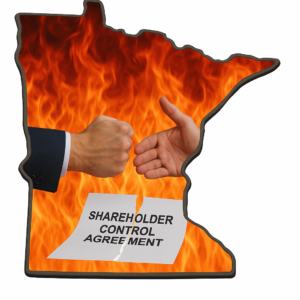
<h2 data-start="498" data-end="546"><span style="font-size: 14pt;"><strong data-start="5626" data-end="5643"><img class="alignnone size-medium wp-image-46943" src="/wp-content/uploads/sites/1604859/2025/11/buysell-1-280x300.png" alt="" width="280" height="300" /></strong></span>Introduction: Your Exit Plan is Your Leverage</h2>
<p data-start="548" data-end="973"><span style="font-size: 14pt;">In a closely held Minnesota business, ownership and employment often overlap. When an owner retires, becomes disabled, dies, gets divorced, or the relationship simply breaks, the difference between an orderly transition and a scorched-earth “business divorce” is often a <strong data-start="819" data-end="854">well-drafted buy-sell agreement</strong> (for corporations, usually embedded in a <strong data-start="896" data-end="929">Shareholder Control Agreement</strong>; for LLCs, in the <strong data-start="948" data-end="971">Operating Agreement</strong>).</span></p>
<p data-start="975" data-end="1158"><span style="font-size: 14pt;">This guide explains <strong data-start="995" data-end="1047">how buy-sell and operating agreements work under Minnesota law</strong>, the <strong data-start="1053" data-end="1102">valuation choices that make or break a buyout</strong>, and <strong data-start="1108" data-end="1135">practical drafting tips</strong> to prevent litigation.</span></p>


<hr data-start="1160" data-end="1163" />

<h2 data-start="1165" data-end="1211">Where Buy-Sell Agreements Live in Minnesota</h2>
<ul data-start="1213" data-end="1802">
 	<li data-start="1213" data-end="1590">
<p data-start="1215" data-end="1590"><span style="font-size: 14pt;"><strong data-start="1215" data-end="1249">Close Corporations (Ch. 302A):</strong> Minnesota recognizes <strong data-start="1271" data-end="1312">Shareholder Control Agreements (SCAs)</strong> that can override many default rules if adopted by all shareholders (see <strong data-start="1386" data-end="1412">Minn. Stat. § 302A.457</strong>). A buy-sell is commonly embedded in or referenced by the SCA. Remedies for oppression remain available (<strong data-start="1518" data-end="1532">§ 302A.751</strong>), but a clear buy-sell reduces the need to invoke them.</span></p>
</li>
 	<li data-start="1591" data-end="1802">
<p data-start="1593" data-end="1802"><span style="font-size: 14pt;"><strong data-start="1593" data-end="1613">LLCs (Ch. 322C):</strong> The <strong data-start="1618" data-end="1641">Operating Agreement</strong> governs member rights, transfers, and exit mechanics. Judicial remedies exist (<strong data-start="1721" data-end="1736">§ 322C.0701</strong>), yet a detailed buy-sell provision is the first line of defense.</span></p>
</li>
</ul>
<blockquote data-start="1804" data-end="1985">
<p data-start="1806" data-end="1985"><span style="font-size: 14pt;">Practical tip: Keep the buy-sell <strong data-start="1839" data-end="1849">inside</strong> the governing agreement (SCA or Operating Agreement) or clearly incorporate it by reference to avoid “which document controls?” fights.</span></p>
</blockquote>

<hr data-start="1987" data-end="1990" />

<h2 data-start="1992" data-end="2034">What a Buy-Sell Agreement Actually Does</h2>
<p data-start="2036" data-end="2109"><span style="font-size: 14pt;">A buy-sell is a pre-negotiated <strong data-start="2067" data-end="2080">mechanism</strong> that answers four questions:</span></p>

<ol data-start="2111" data-end="2356">
 	<li data-start="2111" data-end="2181">
<p data-start="2114" data-end="2181"><span style="font-size: 14pt;"><strong data-start="2114" data-end="2122">When</strong> can/ must an owner’s interest be purchased? (<em data-start="2168" data-end="2178">Triggers</em>)</span></p>
</li>
 	<li data-start="2182" data-end="2244">
<p data-start="2185" data-end="2244"><span style="font-size: 14pt;"><strong data-start="2185" data-end="2192">Who</strong> must/ may buy it? (<em data-start="2212" data-end="2241">Buyer hierarchy and options</em>)</span></p>
</li>
 	<li data-start="2245" data-end="2306">
<p data-start="2248" data-end="2306"><span style="font-size: 14pt;"><strong data-start="2248" data-end="2265">For how much?</strong> (<em data-start="2267" data-end="2303">Valuation standard and methodology</em>)</span></p>
</li>
 	<li data-start="2307" data-end="2356">
<p data-start="2310" data-end="2356"><span style="font-size: 14pt;"><strong data-start="2310" data-end="2317">How</strong> will it be paid? (<em data-start="2336" data-end="2355">Funding and terms</em>)</span></p>
</li>
</ol>
<p data-start="2358" data-end="2426"><span style="font-size: 14pt;">Get those right and you’ve eliminated 90% of future litigation risk.</span></p>


<hr data-start="2428" data-end="2431" />

<h2 data-start="2433" data-end="2483">Common Triggers (Tailor These to Your Business)</h2>
<ul data-start="2485" data-end="3240">
 	<li data-start="2485" data-end="2541">
<p data-start="2487" data-end="2541"><span style="font-size: 14pt;"><strong data-start="2487" data-end="2496">Death</strong> (mandatory buyout; often insurance-funded)</span></p>
</li>
 	<li data-start="2542" data-end="2616">
<p data-start="2544" data-end="2616"><span style="font-size: 14pt;"><strong data-start="2544" data-end="2558">Disability</strong> (define “disability,” waiting period, and verification)</span></p>
</li>
 	<li data-start="2617" data-end="2691">
<p data-start="2619" data-end="2691"><span style="font-size: 14pt;"><strong data-start="2619" data-end="2633">Retirement</strong> (age and service thresholds; phased buyout eligibility)</span></p>
</li>
 	<li data-start="2692" data-end="2775">
<p data-start="2694" data-end="2775"><span style="font-size: 14pt;"><strong data-start="2694" data-end="2726">Voluntary Exit / Resignation</strong> (notice requirements; non-compete interaction)</span></p>
</li>
 	<li data-start="2776" data-end="2851">
<p data-start="2778" data-end="2851"><span style="font-size: 14pt;"><strong data-start="2778" data-end="2803">Termination for Cause</strong> (define “cause” precisely; price adjustments)</span></p>
</li>
 	<li data-start="2852" data-end="2947">
<p data-start="2854" data-end="2947"><span style="font-size: 14pt;"><strong data-start="2854" data-end="2887">Divorce / Marital Dissolution</strong> (prevent transfers to non-owner spouses; spousal consent)</span></p>
</li>
 	<li data-start="2948" data-end="3006">
<p data-start="2950" data-end="3006"><span style="font-size: 14pt;"><strong data-start="2950" data-end="2977">Bankruptcy / Insolvency</strong> (prevent creditor seizure)</span></p>
</li>
 	<li data-start="3007" data-end="3084">
<p data-start="3009" data-end="3084"><span style="font-size: 14pt;"><strong data-start="3009" data-end="3040">Deadlock / Material Dispute</strong> (tie to a shoot-out or appraisal process)</span></p>
</li>
 	<li data-start="3085" data-end="3177">
<p data-start="3087" data-end="3177"><span style="font-size: 14pt;"><strong data-start="3087" data-end="3126">Breach of Fiduciary Duty / Covenant</strong> (forfeiture or discounted price, if enforceable)</span></p>
</li>
 	<li data-start="3178" data-end="3240">
<p data-start="3180" data-end="3240"><span style="font-size: 14pt;"><strong data-start="3180" data-end="3213">Failure to Meet Capital Calls</strong> (dilution vs. forced sale)</span></p>
</li>
</ul>
<blockquote data-start="3242" data-end="3436">
<p data-start="3244" data-end="3436"><span style="font-size: 14pt;">Drafting pointer: <strong data-start="3262" data-end="3315">Separate “good leaver” and “bad leaver” schedules</strong> with different timelines and pricing adjustments. Define everything—especially “cause,” “competition,” and “disability.”</span></p>
</blockquote>

<hr data-start="3438" data-end="3441" />

<h2 data-start="3443" data-end="3504">Valuation: The Clause Everyone Regrets (or Thanks You For)</h2>
<h3 data-start="3506" data-end="3543">Choose the <strong data-start="3521" data-end="3543">Valuation Standard</strong></h3>
<ul data-start="3544" data-end="4009">
 	<li data-start="3544" data-end="3745">
<p data-start="3546" data-end="3745"><span style="font-size: 14pt;"><strong data-start="3546" data-end="3560">Fair Value</strong> (Minnesota litigation standard in many corporate buyouts): generally <strong data-start="3630" data-end="3642">excludes</strong> discounts for minority status or lack of marketability unless owners <strong data-start="3712" data-end="3732">explicitly agree</strong> otherwise.</span></p>
</li>
 	<li data-start="3746" data-end="3869">
<p data-start="3748" data-end="3869"><span style="font-size: 14pt;"><strong data-start="3748" data-end="3770">Fair Market Value:</strong> price between hypothetical willing buyer and seller; <strong data-start="3824" data-end="3844">usually includes</strong> appropriate discounts.</span></p>
</li>
 	<li data-start="3870" data-end="3934">
<p data-start="3872" data-end="3934"><span style="font-size: 14pt;"><strong data-start="3872" data-end="3886">Book Value</strong> (rarely appropriate for operating companies).</span></p>
</li>
 	<li data-start="3935" data-end="4009">
<p data-start="3937" data-end="4009"><span style="font-size: 14pt;"><strong data-start="3937" data-end="3957">Investment Value</strong> (company-specific synergies; risky if not defined).</span></p>
</li>
</ul>
<blockquote data-start="4011" data-end="4246">
<p data-start="4013" data-end="4246"><span style="font-size: 14pt;">Minnesota note: If you don’t specify a standard, a court later deciding price (e.g., under <strong data-start="4104" data-end="4118">§ 302A.751</strong> or <strong data-start="4122" data-end="4137">§ 322C.0701</strong>) may default to <strong data-start="4154" data-end="4168">fair value</strong> concepts. If you want <strong data-start="4191" data-end="4212">fair market value</strong> or discounts, say so <strong data-start="4234" data-end="4245">clearly</strong>.</span></p>
</blockquote>
<h3 data-start="4248" data-end="4276">Pick the <strong data-start="4261" data-end="4276">Methodology</strong></h3>
<ul data-start="4277" data-end="4877">
 	<li data-start="4277" data-end="4389">
<p data-start="4279" data-end="4389"><span style="font-size: 14pt;"><strong data-start="4279" data-end="4294">Fixed Price</strong> (update annually by written schedule). <em data-start="4334" data-end="4387">Clean when maintained; disastrous if it goes stale.</em></span></p>
</li>
 	<li data-start="4390" data-end="4605">
<p data-start="4392" data-end="4605"><span style="font-size: 14pt;"><strong data-start="4392" data-end="4409">Formula-Based</strong> (e.g., x times trailing twelve-month EBITDA; revenue multiple for certain practices). <em data-start="4496" data-end="4603">Be explicit about normalization, owner comp adjustments, PPP/one-time items, and working capital targets.</em></span></p>
</li>
 	<li data-start="4606" data-end="4877">
<p data-start="4608" data-end="4627"><span style="font-size: 14pt;"><strong data-start="4608" data-end="4627">Appraisal-Based</strong></span></p>

<ul data-start="4630" data-end="4877">
 	<li data-start="4630" data-end="4708">
<p data-start="4632" data-end="4708"><span style="font-size: 14pt;"><strong data-start="4632" data-end="4652">Single appraiser</strong> mutually selected (or selected by firm’s accountant).</span></p>
</li>
 	<li data-start="4711" data-end="4778">
<p data-start="4713" data-end="4778"><span style="font-size: 14pt;"><strong data-start="4713" data-end="4755">Two appraisers, with a third if needed</strong> (median or average).</span></p>
</li>
 	<li data-start="4781" data-end="4877">
<p data-start="4783" data-end="4877"><span style="font-size: 14pt;"><strong data-start="4783" data-end="4805">Base-year template</strong>: define approaches (income/market/asset), weighting, and normalization.</span></p>
</li>
</ul>
</li>
</ul>
<h3 data-start="4879" data-end="4912">Fine-Tune the <strong data-start="4897" data-end="4912">Adjustments</strong></h3>
<ul data-start="4913" data-end="5306">
 	<li data-start="4913" data-end="4998">
<p data-start="4915" data-end="4998"><span style="font-size: 14pt;"><strong data-start="4915" data-end="4938">Working Capital Peg</strong> (target net working capital at close; define components).</span></p>
</li>
 	<li data-start="4999" data-end="5076">
<p data-start="5001" data-end="5076"><span style="font-size: 14pt;"><strong data-start="5001" data-end="5026">Debt-free / cash-free</strong> (spell out lines of credit, shareholder loans).</span></p>
</li>
 	<li data-start="5077" data-end="5130">
<p data-start="5079" data-end="5130"><span style="font-size: 14pt;"><strong data-start="5079" data-end="5109">Key Person / Customer Risk</strong> (caps or collars).</span></p>
</li>
 	<li data-start="5131" data-end="5212">
<p data-start="5133" data-end="5212"><span style="font-size: 14pt;"><strong data-start="5133" data-end="5160">Non-compete assumptions</strong> (if the seller won’t sign one, price may adjust).</span></p>
</li>
 	<li data-start="5213" data-end="5306">
<p data-start="5215" data-end="5306"><span style="font-size: 14pt;"><strong data-start="5215" data-end="5253">Minority &amp; Marketability Discounts</strong> (include/exclude explicitly; align with standard).</span></p>
</li>
</ul>
<blockquote data-start="5308" data-end="5459">
<p data-start="5310" data-end="5459"><span style="font-size: 14pt;">Practical tip: Add a <strong data-start="5331" data-end="5361">short “Valuation Glossary”</strong> inside the agreement so future owners know exactly what EBITDA, net debt, and normalization mean.</span></p>
</blockquote>

<hr data-start="5461" data-end="5464" />

<h2 data-start="5466" data-end="5521">Payment Terms: Avoid “Great Price, Impossible Terms”</h2>
<ul data-start="5523" data-end="6135">
 	<li data-start="5523" data-end="5623">
<p data-start="5525" data-end="5623"><span style="font-size: 14pt;"><strong data-start="5525" data-end="5542">Down Payment:</strong> 10–30% at close for smaller companies; more with insurance-funded redemptions.</span></p>
</li>
 	<li data-start="5624" data-end="5705">
<p data-start="5626" data-end="5705"><span style="font-size: 14pt;"><strong data-start="5626" data-end="5643">Installments:</strong> 3–7 years typical; longer for capital-intensive businesses.</span></p>
</li>
 	<li data-start="5706" data-end="5808">
<p data-start="5708" data-end="5808"><span style="font-size: 14pt;"><strong data-start="5708" data-end="5726">Interest Rate:</strong> fixed or floating (e.g., WSJ prime + x%); interest-only grace period permitted.</span></p>
</li>
 	<li data-start="5809" data-end="5900">
<p data-start="5811" data-end="5900"><span style="font-size: 14pt;"><strong data-start="5811" data-end="5824">Security:</strong> pledge the purchased interest; UCC lien; personal guarantees (sparingly).</span></p>
</li>
 	<li data-start="5901" data-end="5991">
<p data-start="5903" data-end="5991"><span style="font-size: 14pt;"><strong data-start="5903" data-end="5929">Clawbacks / Earn-outs:</strong> consider for key customer retention or earn-out milestones.</span></p>
</li>
 	<li data-start="5992" data-end="6064">
<p data-start="5994" data-end="6064"><span style="font-size: 14pt;"><strong data-start="5994" data-end="6011">Acceleration:</strong> on default, change of control, or covenant breach.</span></p>
</li>
 	<li data-start="6065" data-end="6135">
<p data-start="6067" data-end="6135"><span style="font-size: 14pt;"><strong data-start="6067" data-end="6079">Setoffs:</strong> allow offsets for indemnity or undisclosed liabilities.</span></p>
</li>
</ul>
<blockquote data-start="6137" data-end="6270">
<p data-start="6139" data-end="6270"><span style="font-size: 14pt;">Banking reality: If a third-party lender will fund redemptions, <strong data-start="6203" data-end="6230">pre-clear your buy-sell</strong> with that lender. Surprises kill deals.</span></p>
</blockquote>

<hr data-start="6272" data-end="6275" />

<h2 data-start="6277" data-end="6298">Funding the Buyout</h2>
<ul data-start="6300" data-end="6765">
 	<li data-start="6300" data-end="6534">
<p data-start="6302" data-end="6345"><span style="font-size: 14pt;"><strong data-start="6302" data-end="6343">Life &amp; Disability Buy-Sell Insurance:</strong></span></p>

<ul data-start="6348" data-end="6534">
 	<li data-start="6348" data-end="6443">
<p data-start="6350" data-end="6443"><span style="font-size: 14pt;"><strong data-start="6350" data-end="6368">Cross-purchase</strong> (owners own policies) vs. <strong data-start="6395" data-end="6416">Entity redemption</strong> (company owns policies).</span></p>
</li>
 	<li data-start="6446" data-end="6534">
<p data-start="6448" data-end="6534"><span style="font-size: 14pt;">Keep <strong data-start="6453" data-end="6495">policy ownership/beneficiary schedules</strong> with the agreement, update annually.</span></p>
</li>
</ul>
</li>
 	<li data-start="6535" data-end="6611">
<p data-start="6537" data-end="6611"><span style="font-size: 14pt;"><strong data-start="6537" data-end="6574">Sinking Fund / Redemption Reserve</strong> (tax-inefficient but predictable).</span></p>
</li>
 	<li data-start="6612" data-end="6686">
<p data-start="6614" data-end="6686"><span style="font-size: 14pt;"><strong data-start="6614" data-end="6632">Bank Financing</strong> (commitment letters are ideal but rare in advance).</span></p>
</li>
 	<li data-start="6687" data-end="6765">
<p data-start="6689" data-end="6765"><span style="font-size: 14pt;"><strong data-start="6689" data-end="6699">Hybrid</strong> (insurance for death/perm disability; installments for others).</span></p>
</li>
</ul>
<blockquote data-start="6767" data-end="6878">
<p data-start="6769" data-end="6878"><span style="font-size: 14pt;">Don’t let insurance drift. <strong data-start="6796" data-end="6821">Annual coverage audit</strong>: face amounts, owners, beneficiaries, and policy status.</span></p>
</blockquote>

<hr data-start="6880" data-end="6883" />

<h2 data-start="6885" data-end="6961">Transfer Restrictions (Keep Ownership in the Family—Your Business Family)</h2>
<ul data-start="6963" data-end="7351">
 	<li data-start="6963" data-end="7043">
<p data-start="6965" data-end="7043"><span style="font-size: 14pt;"><strong data-start="6965" data-end="6981">No transfers</strong> without compliance with the buy-sell (and securities laws).</span></p>
</li>
 	<li data-start="7044" data-end="7109">
<p data-start="7046" data-end="7109"><span style="font-size: 14pt;"><strong data-start="7046" data-end="7086">Right of First Refusal / First Offer</strong> for voluntary sales.</span></p>
</li>
 	<li data-start="7110" data-end="7208">
<p data-start="7112" data-end="7208"><span style="font-size: 14pt;"><strong data-start="7112" data-end="7135">Permitted Transfers</strong> (estate planning trusts, family) with <strong data-start="7174" data-end="7205">assignee/successor joinders</strong>.</span></p>
</li>
 	<li data-start="7209" data-end="7303">
<p data-start="7211" data-end="7303"><span style="font-size: 14pt;"><strong data-start="7211" data-end="7231">Spousal Consents</strong> acknowledging the restrictions (critical in marital-property states).</span></p>
</li>
 	<li data-start="7304" data-end="7351">
<p data-start="7306" data-end="7351"><span style="font-size: 14pt;"><strong data-start="7306" data-end="7326">Put/Call Windows</strong> for planned retirements.</span></p>
</li>
</ul>

<hr data-start="7353" data-end="7356" />

<h2 data-start="7358" data-end="7416">Deadlock &amp; Dispute Mechanisms (Design the Escape Hatch)</h2>
<ul data-start="7418" data-end="7850">
 	<li data-start="7418" data-end="7501">
<p data-start="7420" data-end="7501"><span style="font-size: 14pt;"><strong data-start="7420" data-end="7444">CEO/Board Tiebreaker</strong> or <strong data-start="7448" data-end="7472">Independent Director</strong> vote on enumerated issues.</span></p>
</li>
 	<li data-start="7502" data-end="7554">
<p data-start="7504" data-end="7554"><span style="font-size: 14pt;"><strong data-start="7504" data-end="7528">Baseball Arbitration</strong> for valuation disputes.</span></p>
</li>
 	<li data-start="7555" data-end="7766">
<p data-start="7557" data-end="7675"><span style="font-size: 14pt;"><strong data-start="7557" data-end="7606">Texas/Minnesota “Shotgun” (Buy-Sell) Clauses:</strong> one party names a price; the other must buy or sell at that price.</span></p>

<ul data-start="7678" data-end="7766">
 	<li data-start="7678" data-end="7766">
<p data-start="7680" data-end="7766"><span style="font-size: 14pt;">Use with caution; add cooling-off periods, financing proof, and anti-abuse language.</span></p>
</li>
</ul>
</li>
 	<li data-start="7767" data-end="7850">
<p data-start="7769" data-end="7850"><span style="font-size: 14pt;"><strong data-start="7769" data-end="7814">Mediation → Binding Appraisal/Arbitration</strong> path for speed and confidentiality.</span></p>
</li>
</ul>

<hr data-start="7852" data-end="7855" />

<h2 data-start="7857" data-end="7901">Tax Essentials (Coordinate with Your CPA)</h2>
<ul data-start="7903" data-end="8392">
 	<li data-start="7903" data-end="7979">
<p data-start="7905" data-end="7979"><span style="font-size: 14pt;"><strong data-start="7905" data-end="7929">Entity Type Matters:</strong> C-Corp vs. S-Corp vs. LLC taxed as partnership.</span></p>
</li>
 	<li data-start="7980" data-end="8101">
<p data-start="7982" data-end="8101"><span style="font-size: 14pt;"><strong data-start="7982" data-end="8012">Stock vs. Asset Economics:</strong> Redemptions vs. cross-purchases have different basis and earnings-and-profits effects.</span></p>
</li>
 	<li data-start="8102" data-end="8178">
<p data-start="8104" data-end="8178"><span style="font-size: 14pt;"><strong data-start="8104" data-end="8126">Installment Sales:</strong> interest is taxable; basis recovery rules differ.</span></p>
</li>
 	<li data-start="8179" data-end="8308">
<p data-start="8181" data-end="8308"><span style="font-size: 14pt;"><strong data-start="8181" data-end="8204">Insurance Proceeds:</strong> typically income-tax-free to recipients, but watch C-Corp <strong data-start="8263" data-end="8278">AMT history</strong> and <strong data-start="8283" data-end="8294">§101(j)</strong> compliance.</span></p>
</li>
 	<li data-start="8309" data-end="8392">
<p data-start="8311" data-end="8392"><span style="font-size: 14pt;"><strong data-start="8311" data-end="8356">Section 754 Elections (LLC/Partnerships):</strong> step-up for buyer; plan in advance.</span></p>
</li>
</ul>
<blockquote data-start="8394" data-end="8504">
<p data-start="8396" data-end="8504"><span style="font-size: 14pt;">Put a <strong data-start="8402" data-end="8431">“Tax Coordination” clause</strong> requiring owners to cooperate on elections, allocations, and K-1 timing.</span></p>
</blockquote>

<hr data-start="8506" data-end="8509" />

<h2 data-start="8511" data-end="8565">Minnesota-Specific Pitfalls (and How to Avoid Them)</h2>
<ol data-start="8567" data-end="9327">
 	<li data-start="8567" data-end="8712">
<p data-start="8570" data-end="8712"><span style="font-size: 14pt;"><strong data-start="8570" data-end="8593">Stale Fixed Prices:</strong> If you use a schedule, require <strong data-start="8625" data-end="8651">annual written updates</strong>; if not updated by a set date, fall back to <strong data-start="8696" data-end="8709">appraisal</strong>.</span></p>
</li>
 	<li data-start="8713" data-end="8913">
<p data-start="8716" data-end="8913"><span style="font-size: 14pt;"><strong data-start="8716" data-end="8739">Ambiguous Standard:</strong> Say <strong data-start="8744" data-end="8819">“Fair Value as defined herein (no minority or marketability discounts)”</strong> or <strong data-start="8823" data-end="8880">“Fair Market Value (including appropriate discounts)”</strong>—don’t rely on courts to guess.</span></p>
</li>
 	<li data-start="8914" data-end="9047">
<p data-start="8917" data-end="9047"><span style="font-size: 14pt;"><strong data-start="8917" data-end="8946">Employment vs. Ownership:</strong> If employment ends, does that <strong data-start="8977" data-end="8994">automatically</strong> trigger a buyout, and at what price? Spell it out.</span></p>
</li>
 	<li data-start="9048" data-end="9200">
<p data-start="9051" data-end="9200"><span style="font-size: 14pt;"><strong data-start="9051" data-end="9075">Competing Post-Sale:</strong> Tie <strong data-start="9080" data-end="9105">restrictive covenants</strong> to consideration and Minnesota enforceability standards; carve-outs for passive investments.</span></p>
</li>
 	<li data-start="9201" data-end="9327">
<p data-start="9204" data-end="9327"><span style="font-size: 14pt;"><strong data-start="9204" data-end="9231">Inconsistent Documents:</strong> Align your SCA/Operating Agreement, employment agreements, and any phantom equity/option plans.</span></p>
</li>
</ol>

<hr data-start="9329" data-end="9332" />

<h2 data-start="9334" data-end="9381">Model Clause Starters (Short, Editable Text)</h2>
<blockquote data-start="9383" data-end="9618">
<p data-start="9385" data-end="9618"><span style="font-size: 14pt;"><strong data-start="9385" data-end="9408">Valuation Standard.</strong> “The Purchase Price shall equal the <strong data-start="9445" data-end="9459">Fair Value</strong> of the Interest, determined by Independent Appraisal pursuant to Exhibit A, and <strong data-start="9540" data-end="9561">shall not include</strong> discounts for lack of marketability or minority status.”</span></p>
</blockquote>
<blockquote data-start="9620" data-end="9893">
<p data-start="9622" data-end="9893"><span style="font-size: 14pt;"><strong data-start="9622" data-end="9646">Appraisal Mechanism.</strong> “Buyer and Seller shall jointly select one ASA/ABV-credentialed appraiser within 15 days. Failing agreement, each shall select an appraiser; the two shall select a third. The final price shall be the <strong data-start="9847" data-end="9857">median</strong> of the three conclusions of value.”</span></p>
</blockquote>
<blockquote data-start="9895" data-end="10083">
<p data-start="9897" data-end="10083"><span style="font-size: 14pt;"><strong data-start="9897" data-end="9915">Payment Terms.</strong> “10% at Closing; balance over <strong data-start="9946" data-end="9979">60 equal monthly installments</strong> at the <strong data-start="9987" data-end="10006">Prime Rate + 2%</strong>, secured by a pledge of the Interest. Prepayment permitted without penalty.”</span></p>
</blockquote>
<blockquote data-start="10085" data-end="10255">
<p data-start="10087" data-end="10255"><span style="font-size: 14pt;"><strong data-start="10087" data-end="10109">Insurance Funding.</strong> “The Company shall maintain policies identified on Schedule I. Proceeds shall be applied first to down payment, then to accelerate installments.”</span></p>
</blockquote>
<p data-start="10257" data-end="10329"><span style="font-size: 14pt;">(These are examples only; tailor to your facts and have counsel review.)</span></p>


<hr data-start="10331" data-end="10334" />

<h2 data-start="10336" data-end="10390">Implementation Checklist (Use This Before You Sign)</h2>
<ul class="contains-task-list" data-start="10392" data-end="10968">
 	<li class="task-list-item" data-start="10392" data-end="10461">
<p data-start="10398" data-end="10461"><input disabled="disabled" type="checkbox" /><span style="font-size: 14pt;"> Confirm all owners and spouses sign (SCAs must be unanimous).</span></p>
</li>
 	<li class="task-list-item" data-start="10462" data-end="10552">
<p data-start="10468" data-end="10552"><span style="font-size: 14pt;"><input disabled="disabled" type="checkbox" /> Elect valuation standard &amp; method; attach <strong data-start="10510" data-end="10522">glossary</strong> and <strong data-start="10527" data-end="10549">sample calculation</strong>.</span></p>
</li>
 	<li class="task-list-item" data-start="10553" data-end="10628">
<p data-start="10559" data-end="10628"><span style="font-size: 14pt;"><input disabled="disabled" type="checkbox" /> Identify triggers; define “disability,” “cause,” and “competition.”</span></p>
</li>
 	<li class="task-list-item" data-start="10629" data-end="10698">
<p data-start="10635" data-end="10698"><span style="font-size: 14pt;"><input disabled="disabled" type="checkbox" /> Align transfer restrictions and ROFR with buy-sell mechanics.</span></p>
</li>
 	<li class="task-list-item" data-start="10699" data-end="10765">
<p data-start="10705" data-end="10765"><span style="font-size: 14pt;"><input disabled="disabled" type="checkbox" /> Paper the <strong data-start="10715" data-end="10728">insurance</strong> (ownership, beneficiary, amounts).</span></p>
</li>
 	<li class="task-list-item" data-start="10766" data-end="10834">
<p data-start="10772" data-end="10834"><span style="font-size: 14pt;"><input disabled="disabled" type="checkbox" /> Coordinate <strong data-start="10783" data-end="10790">tax</strong> with CPA (elections, basis, redemptions).</span></p>
</li>
 	<li class="task-list-item" data-start="10835" data-end="10900">
<p data-start="10841" data-end="10900"><span style="font-size: 14pt;"><input disabled="disabled" type="checkbox" /> Add <strong data-start="10845" data-end="10861">dispute path</strong> (mediation → appraisal/arbitration).</span></p>
</li>
 	<li class="task-list-item" data-start="10901" data-end="10968">
<p data-start="10907" data-end="10968"><span style="font-size: 14pt;"><input disabled="disabled" type="checkbox" /> Calendar <strong data-start="10916" data-end="10933">annual review</strong> (price update, insurance audit).</span></p>
</li>
</ul>

<hr data-start="10970" data-end="10973" />

<h2 data-start="10975" data-end="10982">FAQs</h2>
<p data-start="10984" data-end="11143"><span style="font-size: 14pt;"><strong data-start="10984" data-end="11038">Q: Do we need a buy-sell if we “trust each other”?</strong></span><br data-start="11038" data-end="11041" /><span style="font-size: 14pt;">Yes. Buy-sells protect <strong data-start="11064" data-end="11088">families and estates</strong> as much as partners. They turn chaos into a checklist.</span></p>
<p data-start="11145" data-end="11371"><span style="font-size: 14pt;"><strong data-start="11145" data-end="11208">Q: Should our price be “fair value” or “fair market value”?</strong></span><br data-start="11208" data-end="11211" /><span style="font-size: 14pt;">It depends on your goals. Minnesota courts often apply <strong data-start="11266" data-end="11280">fair value</strong> in statutory buyouts; if you want discounts or a market-based price, <strong data-start="11350" data-end="11370">say so expressly</strong>.</span></p>
<p data-start="11373" data-end="11507"><span style="font-size: 14pt;"><strong data-start="11373" data-end="11412">Q: Can the company afford a buyout?</strong></span><br data-start="11412" data-end="11415" /><span style="font-size: 14pt;">Design funding and terms (insurance + installments) so the business <strong data-start="11483" data-end="11506">survives the buyout</strong>.</span></p>
<p data-start="11509" data-end="11667"><span style="font-size: 14pt;"><strong data-start="11509" data-end="11564">Q: What happens if we never update our fixed price?</strong></span><br data-start="11564" data-end="11567" /><span style="font-size: 14pt;">Courts may disregard stale numbers. Include a <strong data-start="11613" data-end="11638">fallback to appraisal</strong> if a schedule isn’t updated.</span></p>


<hr data-start="11669" data-end="11672" />


<hr data-start="12082" data-end="12085" />


<hr data-start="12365" data-end="12368" />

<h2 data-start="12370" data-end="12389">Conclusion &amp; CTA</h2>
<p data-start="12391" data-end="12660"><span style="font-size: 14pt;">A Minnesota buy-sell agreement is <strong data-start="12425" data-end="12432">not</strong> a form; it’s a <strong data-start="12448" data-end="12460">playbook</strong> for the most sensitive moments in your company’s life. If you set clear triggers, a defensible valuation standard, and realistic funding terms, you’ll minimize conflict and preserve enterprise value.</span></p>
<p data-start="12662" data-end="12888"><span style="font-size: 14pt;">Want an attorney to <strong data-start="12682" data-end="12706">draft or stress-test</strong> your current buy-sell (corporation or LLC)? <strong data-start="12751" data-end="12762">MKT Law</strong> reviews, negotiates, and enforces buy-sell agreements for Minnesota business owners. Let’s make your exit plan your leverage.</span></p>

</div>
</div>
</div>
</div>
<div class="z-0 flex min-h-[46px] justify-start"></div>
<div class="mt-3 w-full empty:hidden">
<div class="text-center"></div>
</div>
</div>
</div>
</article>
<div class="pointer-events-none h-px w-px" aria-hidden="true" data-edge="true"></div>
<div></div>
</div>
</div>
</div>
</div>
<div id="thread-bottom-container" class="group/thread-bottom-container relative isolate z-10 w-full basis-auto has-data-has-thread-error:pt-2 has-data-has-thread-error:[box-shadow:var(--sharp-edge-bottom-shadow)] md:border-transparent md:pt-0 dark:border-white/20 md:dark:border-transparent print:hidden content-fade single-line flex flex-col">
<div id="thread-bottom">
<div class="text-base mx-auto [--thread-content-margin:--spacing(4)] thread-sm:[--thread-content-margin:--spacing(6)] thread-lg:[--thread-content-margin:--spacing(16)] px-(--thread-content-margin)">
<div class="[--thread-content-max-width:40rem] thread-lg:[--thread-content-max-width:48rem] mx-auto max-w-(--thread-content-max-width) flex-1">
<div class="flex justify-center empty:hidden"></div>
<div class="pointer-events-auto relative z-1 flex h-[var(--composer-container-height,100%)] max-w-full flex-[var(--composer-container-flex,1)] flex-col">

<button class="invisible absolute self-center" tabindex="-1" name="context-connector-pasted-link-popover-trigger" type="button" aria-hidden="true" aria-haspopup="dialog" aria-expanded="false" aria-controls="radix-_r_fh_" data-state="closed"></button>
<div class="absolute start-0 end-0 bottom-full z-20"></div>
<form class="group/composer w-full" data-type="unified-composer">
<div class="hidden"><input tabindex="-1" multiple="multiple" type="file" /></div>
<div class="">
<div class="bg-token-bg-primary cursor-text overflow-clip bg-clip-padding p-2.5 contain-inline-size dark:bg-[#303030] grid grid-cols-[auto_1fr_auto] [grid-template-areas:'header_header_header'_'leading_primary_trailing'_'._footer_.'] group-data-expanded/composer:[grid-template-areas:'header_header_header'_'primary_primary_primary'_'leading_footer_trailing'] shadow-short">
<div class="-my-2.5 flex min-h-14 items-center overflow-x-hidden px-1.5 [grid-area:primary] group-data-expanded/composer:mb-0 group-data-expanded/composer:px-2.5">
<div class="_prosemirror-parent_1dsxi_2 text-token-text-primary max-h-[max(30svh,5rem)] max-h-52 flex-1 overflow-auto [scrollbar-width:thin] default-browser vertical-scroll-fade-mask">

<textarea class="_fallbackTextarea_1dsxi_2" name="prompt-textarea" placeholder="Ask anything" data-virtualkeyboard="true"></textarea>
<div id="prompt-textarea" class="ProseMirror" contenteditable="true" translate="no" data-virtualkeyboard="true"></div>
</div>
</div>
<div class="[grid-area:leading]"></div>
<div class="flex items-center gap-2 [grid-area:trailing]">
<div class="ms-auto flex items-center gap-1.5">

&nbsp;
<div class="min-w-9" data-testid="composer-speech-button-container">
<div>
<div class="flex items-center justify-center"></div>
</div>
</div>
</div>
</div>
</div>
</div>
</form></div>
</div>
</div>
</div>
</div>]]></content>
						        </entry>
	        <entry>
            <author>
									                    <name>by MKT Law</name>
				            </author>
            <title type="html"><![CDATA[The Business Divorce: When Minnesota Business Partners Break Up]]></title>
            <link rel="alternate" type="text/html" href="https://www.mktlawoffice.com/blog/2025/10/the-business-divorce-when-minnesota-business-partners-break-up/" />
            <id>https://www.mktlawoffice.com/?p=46939</id>
            <updated>2025-10-22T04:43:46Z</updated>
            <published>2025-10-22T04:43:46Z</published>
					<taxo:topics><![CDATA[-]]></taxo:topics>
            <summary type="html"><![CDATA[Introduction: When Business Relationships Turn Personal Starting a business with a partner is a lot like a marriage — built on trust, shared goals, and optimism. But when things fall apart, the business divorce can be just as emotional and far more expensive. For Minnesota business owners, a partner breakup isn’t just a personal crisis — it’s a legal event…]]></summary>
			                <content type="html" xml:base="https://www.mktlawoffice.com/blog/2025/10/the-business-divorce-when-minnesota-business-partners-break-up/"><![CDATA[<h2 data-start="636" data-end="698"><strong data-start="639" data-end="698"><img class="alignnone size-medium wp-image-46940" src="/wp-content/uploads/sites/1604859/2025/10/DIVORSEINC-300x300.png" alt="" width="300" height="300" /><span style="font-size: 24pt;">Introduction: When Business Relationships Turn Personal</span></strong></h2>
<p data-start="700" data-end="909"><span style="font-family: verdana, geneva, sans-serif; font-size: 12pt;">Starting a business with a partner is a lot like a marriage — built on trust, shared goals, and optimism. But when things fall apart, the <strong data-start="838" data-end="858">business divorce</strong> can be just as emotional and far more expensive.</span></p>
<p data-start="911" data-end="1170"><span style="font-family: verdana, geneva, sans-serif; font-size: 12pt;">For Minnesota business owners, a partner breakup isn’t just a personal crisis — it’s a <strong data-start="998" data-end="1013">legal event</strong> governed by state statutes, contracts, and fiduciary duties. How you handle that separation determines whether you walk away intact or financially gutted.</span></p>


<hr data-start="1172" data-end="1175" />

<h2 data-start="1177" data-end="1226"><strong data-start="1180" data-end="1226">Common Causes of Business Partner Breakups</strong></h2>
<p data-start="1228" data-end="1326"><span style="font-family: verdana, geneva, sans-serif; font-size: 12pt;">Partnerships, shareholder relationships, and LLC memberships break down for predictable reasons:</span></p>

<ul data-start="1328" data-end="1746">
 	<li data-start="1328" data-end="1419">
<p data-start="1330" data-end="1419"><span style="font-family: verdana, geneva, sans-serif; font-size: 12pt;"><strong data-start="1330" data-end="1364">Unequal effort or performance.</strong> One partner carries the workload while others coast.</span></p>
</li>
 	<li data-start="1420" data-end="1527">
<p data-start="1422" data-end="1527"><span style="font-family: verdana, geneva, sans-serif; font-size: 12pt;"><strong data-start="1422" data-end="1447">Financial misconduct.</strong> Secret withdrawals, personal expenses through the company, or hiding profits.</span></p>
</li>
 	<li data-start="1528" data-end="1600">
<p data-start="1530" data-end="1600"><span style="font-family: verdana, geneva, sans-serif; font-size: 12pt;"><strong data-start="1530" data-end="1552">Diverging visions.</strong> Growth vs. stability, expansion vs. cash-out.</span></p>
</li>
 	<li data-start="1601" data-end="1678">
<p data-start="1603" data-end="1678"><span style="font-family: verdana, geneva, sans-serif; font-size: 12pt;"><strong data-start="1603" data-end="1623">Breach of trust.</strong> Lying, side deals, or competing against the company.</span></p>
</li>
 	<li data-start="1679" data-end="1746">
<p data-start="1681" data-end="1746"><span style="font-family: verdana, geneva, sans-serif; font-size: 12pt;"><strong data-start="1681" data-end="1698">Life changes.</strong> Retirement, death, divorce, or health issues.</span></p>
</li>
</ul>
<p data-start="1748" data-end="1874"><span style="font-family: verdana, geneva, sans-serif; font-size: 12pt;">When these conflicts go unchecked, the business can quickly become paralyzed — leading to legal action or forced separation.</span></p>


<hr data-start="1876" data-end="1879" />

<h2 data-start="1881" data-end="1939"><strong data-start="1884" data-end="1939">Legal Framework: Minnesota Law on Business Breakups</strong></h2>
<p data-start="1941" data-end="1997"><span style="font-family: verdana, geneva, sans-serif; font-size: 12pt;">The applicable statutes depend on the business entity:</span></p>

<ul data-start="1999" data-end="2334">
 	<li data-start="1999" data-end="2101">
<p data-start="2001" data-end="2101"><span style="font-family: verdana, geneva, sans-serif; font-size: 12pt;"><strong data-start="2001" data-end="2018">Corporations:</strong> Governed by <strong data-start="2031" data-end="2055">Minn. Stat. Ch. 302A</strong>, with oppression remedies under § 302A.751.</span></p>
</li>
 	<li data-start="2102" data-end="2216">
<p data-start="2104" data-end="2216"><span style="font-family: verdana, geneva, sans-serif; font-size: 12pt;"><strong data-start="2104" data-end="2113">LLCs:</strong> Governed by <strong data-start="2126" data-end="2150">Minn. Stat. Ch. 322C</strong>, with judicial dissolution and buyout rights under § 322C.0701.</span></p>
</li>
 	<li data-start="2217" data-end="2334">
<p data-start="2219" data-end="2334"><span style="font-family: verdana, geneva, sans-serif; font-size: 12pt;"><strong data-start="2219" data-end="2236">Partnerships:</strong> Governed by <strong data-start="2249" data-end="2273">Minn. Stat. Ch. 323A</strong>, with default rules on partner withdrawal and dissolution.</span></p>
</li>
</ul>
<p data-start="2336" data-end="2443"><span style="font-family: verdana, geneva, sans-serif; font-size: 12pt;">Each provides mechanisms to address disputes, but the <strong data-start="2390" data-end="2417">facts and documentation</strong> determine who prevails.</span></p>


<hr data-start="2445" data-end="2448" />

<h2 data-start="2450" data-end="2508"><strong data-start="2453" data-end="2508">Recognizing the Warning Signs of a Business Divorce</strong></h2>
<p data-start="2510" data-end="2575"><span style="font-family: verdana, geneva, sans-serif; font-size: 12pt;">Here are telltale signs the partnership is heading for a split:</span></p>

<ul data-start="2577" data-end="2883">
 	<li data-start="2577" data-end="2635">
<p data-start="2579" data-end="2635"><span style="font-family: verdana, geneva, sans-serif; font-size: 12pt;">You’re excluded from management decisions or meetings.</span></p>
</li>
 	<li data-start="2636" data-end="2675">
<p data-start="2638" data-end="2675"><span style="font-family: verdana, geneva, sans-serif; font-size: 12pt;">Distributions are suddenly cut off.</span></p>
</li>
 	<li data-start="2676" data-end="2744">
<p data-start="2678" data-end="2744"><span style="font-family: verdana, geneva, sans-serif; font-size: 12pt;">Corporate information or financial records become “unavailable.”</span></p>
</li>
 	<li data-start="2745" data-end="2798">
<p data-start="2747" data-end="2798"><span style="font-family: verdana, geneva, sans-serif; font-size: 12pt;">You’re pressured to sell your ownership interest.</span></p>
</li>
 	<li data-start="2799" data-end="2883">
<p data-start="2801" data-end="2883"><span style="font-family: verdana, geneva, sans-serif; font-size: 12pt;">Majority owners start compensating themselves heavily while you receive nothing.</span></p>
</li>
</ul>
<p data-start="2885" data-end="3014"><span style="font-family: verdana, geneva, sans-serif; font-size: 12pt;">When these signs appear, it’s time to <strong data-start="2923" data-end="2965">consult a business litigation attorney</strong> — early intervention often saves the business.</span></p>


<hr data-start="3016" data-end="3019" />

<h2 data-start="3021" data-end="3066"><strong data-start="3024" data-end="3066">Step 1: Review the Governing Documents</strong></h2>
<p data-start="3068" data-end="3114"><span style="font-family: verdana, geneva, sans-serif; font-size: 12pt;">Your first step in any breakup is reviewing:</span></p>

<ul data-start="3115" data-end="3278">
 	<li data-start="3115" data-end="3167">
<p data-start="3117" data-end="3167"><span style="font-family: verdana, geneva, sans-serif; font-size: 12pt;"><strong data-start="3117" data-end="3165">Operating Agreement or Shareholder Agreement</strong></span></p>
</li>
 	<li data-start="3168" data-end="3207">
<p data-start="3170" data-end="3207"><span style="font-family: verdana, geneva, sans-serif; font-size: 12pt;"><strong data-start="3170" data-end="3205">Bylaws or Partnership Agreement</strong></span></p>
</li>
 	<li data-start="3208" data-end="3235">
<p data-start="3210" data-end="3235"><span style="font-family: verdana, geneva, sans-serif; font-size: 12pt;"><strong data-start="3210" data-end="3233">Buy-Sell Agreements</strong></span></p>
</li>
 	<li data-start="3236" data-end="3278">
<p data-start="3238" data-end="3278"><span style="font-family: verdana, geneva, sans-serif; font-size: 12pt;"><strong data-start="3238" data-end="3278">Employment or Compensation Contracts</strong></span></p>
</li>
</ul>
<p data-start="3280" data-end="3397"><span style="font-family: verdana, geneva, sans-serif; font-size: 12pt;">These documents often dictate <strong data-start="3310" data-end="3355">buyout formulas, triggers, and procedures</strong> for resolving deadlocks or separations.</span></p>
<p data-start="3399" data-end="3549"><span style="font-family: verdana, geneva, sans-serif; font-size: 12pt;"><strong data-start="3399" data-end="3411">Example:</strong> A buy-sell clause might require an independent valuation or grant one party the option to buy the other out at a predetermined formula.</span></p>
<p data-start="3551" data-end="3669"><span style="font-family: verdana, geneva, sans-serif; font-size: 12pt;">If no agreement exists, Minnesota’s statutory defaults apply — usually meaning more uncertainty and more litigation.</span></p>


<hr data-start="3671" data-end="3674" />

<h2 data-start="3676" data-end="3711"><strong data-start="3679" data-end="3711">Step 2: Determine Fair Value</strong></h2>
<p data-start="3713" data-end="3944"><span style="font-family: verdana, geneva, sans-serif; font-size: 12pt;">Valuation disputes are at the core of every business divorce. The term “<strong data-start="3785" data-end="3799">fair value</strong>” under Minnesota law (not “fair market value”) <strong data-start="3847" data-end="3869">excludes discounts</strong> for minority ownership or lack of marketability unless agreed otherwise.</span></p>
<p data-start="3946" data-end="3976"><span style="font-family: verdana, geneva, sans-serif; font-size: 12pt;">Fair value is determined by:</span></p>

<ul data-start="3977" data-end="4072">
 	<li data-start="3977" data-end="4003">
<p data-start="3979" data-end="4003"><span style="font-family: verdana, geneva, sans-serif; font-size: 12pt;">Independent appraisals</span></p>
</li>
 	<li data-start="4004" data-end="4028">
<p data-start="4006" data-end="4028"><span style="font-family: verdana, geneva, sans-serif; font-size: 12pt;">Financial statements</span></p>
</li>
 	<li data-start="4029" data-end="4051">
<p data-start="4031" data-end="4051"><span style="font-family: verdana, geneva, sans-serif; font-size: 12pt;">Cash flow analyses</span></p>
</li>
 	<li data-start="4052" data-end="4072">
<p data-start="4054" data-end="4072"><span style="font-family: verdana, geneva, sans-serif; font-size: 12pt;">Expert testimony</span></p>
</li>
</ul>
<p data-start="4074" data-end="4185"><span style="font-family: verdana, geneva, sans-serif; font-size: 12pt;">A seasoned valuation expert is often the difference between recovering your investment or being shortchanged.</span></p>


<hr data-start="4187" data-end="4190" />

<h2 data-start="4192" data-end="4229"><strong data-start="4195" data-end="4229">Step 3: Consider Your Remedies</strong></h2>
<p data-start="4231" data-end="4349"><span style="font-family: verdana, geneva, sans-serif; font-size: 12pt;">Minnesota courts have broad authority to impose equitable relief. Depending on the facts, your remedies may include:</span></p>

<h3 data-start="4351" data-end="4384"><span style="font-family: verdana, geneva, sans-serif;"><strong data-start="4355" data-end="4382">A. Court-Ordered Buyout</strong></span></h3>
<p data-start="4385" data-end="4518"><span style="font-family: verdana, geneva, sans-serif; font-size: 12pt;">The most common remedy — the court orders your partner or the company to purchase your shares or membership interest at fair value.</span></p>

<h3 data-start="4520" data-end="4569"><span style="font-family: verdana, geneva, sans-serif;"><strong data-start="4524" data-end="4567">B. Damages for Breach of Fiduciary Duty</strong></span></h3>
<p data-start="4570" data-end="4677"><span style="font-family: verdana, geneva, sans-serif; font-size: 12pt;">If your partner acted dishonestly, diverted profits, or froze you out, you may recover financial damages.</span></p>

<h3 data-start="4679" data-end="4709"><span style="font-family: verdana, geneva, sans-serif;"><strong data-start="4683" data-end="4707">C. Injunctive Relief</strong></span></h3>
<p data-start="4710" data-end="4819"><span style="font-family: verdana, geneva, sans-serif; font-size: 12pt;">A court can stop ongoing misconduct (e.g., misappropriation, unauthorized spending, or record concealment).</span></p>

<h3 data-start="4821" data-end="4854"><span style="font-family: verdana, geneva, sans-serif;"><strong data-start="4825" data-end="4852">D. Judicial Dissolution</strong></span></h3>
<p data-start="4855" data-end="4989"><span style="font-family: verdana, geneva, sans-serif; font-size: 12pt;">As a last resort, the court can dissolve the business. While drastic, it sometimes provides necessary closure and asset liquidation.</span></p>


<hr data-start="4991" data-end="4994" />

<h2 data-start="4996" data-end="5056"><strong data-start="4999" data-end="5056">Step 4: Choose a Strategy — Negotiation or Litigation</strong></h2>
<p data-start="5058" data-end="5181"><span style="font-size: 12pt; font-family: verdana, geneva, sans-serif;">A Minnesota business divorce doesn’t always need to end up in court. The right strategy depends on leverage and evidence.</span></p>

<ul data-start="5183" data-end="5585">
 	<li data-start="5183" data-end="5302">
<p data-start="5185" data-end="5302"><span style="font-size: 12pt; font-family: verdana, geneva, sans-serif;"><strong data-start="5185" data-end="5207">Negotiated Buyout:</strong> If both sides act rationally, mediation or private negotiation can yield a clean separation.</span></p>
</li>
 	<li data-start="5303" data-end="5455">
<p data-start="5305" data-end="5455"><span style="font-size: 12pt; font-family: verdana, geneva, sans-serif;"><strong data-start="5305" data-end="5320">Litigation:</strong> When trust breaks down, litigation may be unavoidable — but it’s also a strategic tool to <strong data-start="5411" data-end="5434">force a fair buyout</strong> or accountability.</span></p>
</li>
 	<li data-start="5456" data-end="5585">
<p data-start="5458" data-end="5585"><span style="font-size: 12pt; font-family: verdana, geneva, sans-serif;"><strong data-start="5458" data-end="5475">Receivership:</strong> In deadlocked or mismanaged businesses, courts can appoint a receiver to preserve value during the dispute.</span></p>
</li>
</ul>

<hr data-start="5587" data-end="5590" />

<h2 data-start="5592" data-end="5644"><strong data-start="5595" data-end="5644">Step 5: Protect the Business During the Split</strong></h2>
<p data-start="5646" data-end="5735"><span style="font-family: verdana, geneva, sans-serif; font-size: 12pt;">During a breakup, the business itself often becomes collateral damage. Safeguard it by:</span></p>

<ul data-start="5736" data-end="5931">
 	<li data-start="5736" data-end="5786">
<p data-start="5738" data-end="5786"><span style="font-family: verdana, geneva, sans-serif; font-size: 12pt;">Securing bank accounts and financial controls.</span></p>
</li>
 	<li data-start="5787" data-end="5821">
<p data-start="5789" data-end="5821"><span style="font-family: verdana, geneva, sans-serif; font-size: 12pt;">Freezing unnecessary spending.</span></p>
</li>
 	<li data-start="5822" data-end="5881">
<p data-start="5824" data-end="5881"><span style="font-family: verdana, geneva, sans-serif; font-size: 12pt;">Retaining key employees with transparent communication.</span></p>
</li>
 	<li data-start="5882" data-end="5931">
<p data-start="5884" data-end="5931"><span style="font-family: verdana, geneva, sans-serif; font-size: 12pt;">Preserving customer and vendor relationships.</span></p>
</li>
</ul>
<p data-start="5933" data-end="6096"><span style="font-family: verdana, geneva, sans-serif; font-size: 12pt;">Remember: every action during a business divorce will be scrutinized later in court. Conduct yourself like every email could be an exhibit — because it might be.</span></p>


<hr data-start="6098" data-end="6101" />

<strong style="color: #333333; font-size: 26px;" data-start="6336" data-end="6344">FAQs</strong>
<p data-start="6346" data-end="6537"><span style="font-family: verdana, geneva, sans-serif; font-size: 12pt;"><strong data-start="6346" data-end="6394">Q: Can I remove my partner from the company?</strong></span><br data-start="6394" data-end="6397" /><span style="font-family: verdana, geneva, sans-serif; font-size: 12pt;">Maybe — it depends on your agreements and ownership percentages. Courts generally disfavor unilateral expulsions unless expressly allowed.</span></p>
<p data-start="6539" data-end="6698"><span style="font-family: verdana, geneva, sans-serif; font-size: 12pt;"><strong data-start="6539" data-end="6594">Q: What if my partner locks me out of the business?</strong></span><br data-start="6594" data-end="6597" /><span style="font-family: verdana, geneva, sans-serif; font-size: 12pt;">You can seek a court injunction and potentially damages for oppression or breach of fiduciary duty.</span></p>
<p data-start="6700" data-end="6876"><span style="font-family: verdana, geneva, sans-serif; font-size: 12pt;"><strong data-start="6700" data-end="6745">Q: How long does a business divorce take?</strong></span><br data-start="6745" data-end="6748" /><span style="font-family: verdana, geneva, sans-serif; font-size: 12pt;">Negotiated separations may conclude within months; litigated cases can extend over a year, especially with valuation disputes.</span></p>


<hr data-start="6878" data-end="6881" />

<h2 data-start="6883" data-end="6951"><strong data-start="6886" data-end="6951">Conclusion: Ending the Partnership Without Ending Your Future</strong></h2>
<p data-start="6953" data-end="7087"><span style="font-family: verdana, geneva, sans-serif; font-size: 12pt;">A business divorce is emotional and financially complex, but with the right strategy and counsel, it’s survivable — even profitable.</span></p>
<p data-start="7089" data-end="7341"><span style="font-family: verdana, geneva, sans-serif; font-size: 12pt;">Minnesota law protects business owners from unfair treatment and provides mechanisms for fair exits. Whether through negotiation or courtroom action, <strong data-start="7239" data-end="7250">MKT Law</strong> can help you enforce your rights, protect your assets, and move on stronger than before.</span></p>]]></content>
						        </entry>
	        <entry>
            <author>
									                    <name>by MKT Law</name>
				            </author>
            <title type="html"><![CDATA[Minnesota LLC Member Rights in Closely Held Companies]]></title>
            <link rel="alternate" type="text/html" href="https://www.mktlawoffice.com/blog/2025/09/minnesota-llc-member-rights-in-closely-held-companies/" />
            <id>https://www.mktlawoffice.com/?p=46936</id>
            <updated>2025-09-16T11:47:16Z</updated>
            <published>2025-09-16T11:47:16Z</published>
					<taxo:topics><![CDATA[LLC]]></taxo:topics>
            <summary type="html"><![CDATA[Introduction: LLCs as Close Corporations Limited Liability Companies (LLCs) have become the entity of choice for small Minnesota businesses.  New LLC Business filings in Minnesota: 2025 (partial year through August): 44,501 2023: 62,188 2022: 55,501 2015,  31,000+ In the US there are over 21.6 million LLCs. They combine flexible management, pass-through taxation, and limited liability protection. But when ownership is concentrated among…]]></summary>
			                <content type="html" xml:base="https://www.mktlawoffice.com/blog/2025/09/minnesota-llc-member-rights-in-closely-held-companies/"><![CDATA[<table style="border-collapse: collapse; width: 100%;">
<tbody>
<tr>
<td style="width: 50%;"><strong style="font-family: verdana, geneva, sans-serif;">Introduction: LLCs as Close Corporations</strong></td>
<td style="width: 50%;"><img class="alignnone size-medium wp-image-46937" src="/wp-content/uploads/sites/1604859/2025/09/mnllc-274x300.png" alt="" width="274" height="300" /></td>
</tr>
</tbody>
</table>
<span style="font-family: verdana, geneva, sans-serif;">Limited Liability Companies (LLCs) have become the <strong>entity of choice</strong> for small Minnesota businesses. </span>

New LLC Business filings in Minnesota:
<ul class="U6u95" data-processed="true">
 	<li data-hveid="CAMQAA"><a href="https://www.sos.mn.gov/business-liens/business-liens-data/new-business-filings-2025/#:~:text=Table_title:%20New%20Business%20Filings%202025%20Table_content:%20header:,%7C%20Aug:%207%2C794%20%7C%20Total:%2067%2C788%20%7C" data-wpel-link="external" target="_blank" rel="noopener noreferrer"><strong><span class="T286Pc">2025 (partial year through August): 44,501</span></strong></a></li>
 	<li data-hveid="CAMQAQ"><a href="https://www.sos.mn.gov/business-liens/business-liens-data/new-business-filings-2023/" data-wpel-link="external" target="_blank" rel="noopener noreferrer"><strong><span class="T286Pc">2023: 62,188</span></strong></a></li>
 	<li data-hveid="CAMQAg"><a href="https://www.sos.mn.gov/business-liens/business-liens-data/new-business-filings-2022/" data-wpel-link="external" target="_blank" rel="noopener noreferrer"><strong><span class="T286Pc">2022: 55,501</span></strong></a></li>
 	<li data-hveid="CAMQAg"><strong>2015,  31,000+ </strong></li>
 	<li data-hveid="CAMQAg">In the US there are over 21.6 million LLCs.</li>
</ul>
They combine flexible management, pass-through taxation, and limited liability protection. But when ownership is concentrated among a few individuals, Minnesota LLCs face the same risks as close corporations: <strong style="font-family: verdana, geneva, sans-serif;">conflicts, freeze-outs, and member oppression.</strong>

<span style="font-family: verdana, geneva, sans-serif;">If you’re a minority member in a Minnesota LLC, you need to know your rights — and how to enforce them when majority members act unfairly.</span>

<span style="font-family: verdana, geneva, sans-serif;"><strong>The Legal Framework: Minnesota Revised Uniform LLC Act (Chapter 322C)</strong></span>

<span style="font-family: verdana, geneva, sans-serif;">In 2015, Minnesota adopted the <strong>Revised Uniform Limited Liability Company Act</strong> (RULLCA), codified at <strong>Minn. Stat. Ch. 322C</strong>. It governs rights and obligations of LLC members and managers.</span>

<span style="font-family: verdana, geneva, sans-serif;">Key features include:</span>
<ul>
 	<li><span style="font-family: verdana, geneva, sans-serif;"><strong>Contractual Flexibility:</strong> The <strong>Operating Agreement</strong> controls most governance issues.</span></li>
 	<li><span style="font-family: verdana, geneva, sans-serif;"><strong>Fiduciary Duties:</strong> Members and managers must act in good faith and with loyalty.</span></li>
 	<li><span style="font-family: verdana, geneva, sans-serif;"><strong>Judicial Remedies:</strong> Courts can intervene when actions are oppressive, fraudulent, or harmful.</span></li>
</ul>
<span style="font-family: verdana, geneva, sans-serif;"><strong>Core Rights of Minnesota LLC Members</strong></span>
<ol>
 	<li><span style="font-family: verdana, geneva, sans-serif;"><strong> Financial Rights</strong></span></li>
</ol>
<ul>
 	<li><span style="font-family: verdana, geneva, sans-serif;"><strong>Right to Distributions:</strong> When declared, distributions must be assigned based on ownership interests.</span></li>
 	<li><span style="font-family: verdana, geneva, sans-serif;"><strong>Protection from Improper Withholding:</strong> Denying distributions while majority members pay themselves excessive salaries may be oppression.</span></li>
</ul>
<ol start="2">
 	<li><span style="font-family: verdana, geneva, sans-serif;"><strong> Access to Records</strong></span></li>
</ol>
<span style="font-family: verdana, geneva, sans-serif;">Under <strong>Minn. Stat. § 322C.0410</strong>, members have the right to access:</span>
<ul>
 	<li><span style="font-family: verdana, geneva, sans-serif;">Financial statements.</span></li>
 	<li><span style="font-family: verdana, geneva, sans-serif;">Tax returns.</span></li>
 	<li><span style="font-family: verdana, geneva, sans-serif;">Operating agreements and amendments.</span></li>
 	<li><span style="font-family: verdana, geneva, sans-serif;">Minutes and records of decisions.</span>
<span style="font-family: verdana, geneva, sans-serif;">Failure to provide records can trigger statutory penalties and court action.</span></li>
</ul>
<ol start="3">
 	<li><span style="font-family: verdana, geneva, sans-serif;"><strong> Voting &amp; Governance</strong></span></li>
</ol>
<ul>
 	<li><span style="font-family: verdana, geneva, sans-serif;">Members typically vote on significant company matters unless the operating agreement provides otherwise.</span></li>
 	<li><span style="font-family: verdana, geneva, sans-serif;">Voting rights may include admitting new members, changing the operating agreement, mergers, or dissolutions.</span></li>
</ul>
<ol start="4">
 	<li><span style="font-family: verdana, geneva, sans-serif;"><strong> Fiduciary Protections</strong></span></li>
</ol>
<span style="font-family: verdana, geneva, sans-serif;">Managers and members in control owe duties of loyalty and care under <strong>Minn. Stat. § 322C.0409</strong>, including:</span>
<ul>
 	<li><span style="font-family: verdana, geneva, sans-serif;">Acting honestly and in good faith.</span></li>
 	<li><span style="font-family: verdana, geneva, sans-serif;">Avoiding self-dealing.</span></li>
 	<li><span style="font-family: verdana, geneva, sans-serif;">Disclosing conflicts of interest.</span></li>
</ul>
<span style="font-family: verdana, geneva, sans-serif;"><strong>Common Disputes in Minnesota Close LLCs</strong></span>

<span style="font-family: verdana, geneva, sans-serif;"><strong>Freeze-Outs</strong></span>

<span style="font-family: verdana, geneva, sans-serif;">Tactics mirror close corporation freeze-outs:</span>
<ul>
 	<li><span style="font-family: verdana, geneva, sans-serif;">Terminating minority members’ employment.</span></li>
 	<li><span style="font-family: verdana, geneva, sans-serif;">Cutting distributions while keeping profits for insiders.</span></li>
 	<li><span style="font-family: verdana, geneva, sans-serif;">Blocking access to company records.</span></li>
</ul>
<span style="font-family: verdana, geneva, sans-serif;"><strong>Misuse of Company Assets</strong></span>

<span style="font-family: verdana, geneva, sans-serif;">Examples include majority members taking corporate opportunities, commingling funds, or running personal expenses through the LLC.</span>

<span style="font-family: verdana, geneva, sans-serif;"><strong>Valuation Battles</strong></span>

<span style="font-family: verdana, geneva, sans-serif;">When a member exits voluntarily or involuntarily, disputes arise over the <strong>fair value</strong> of their interest. Unlike corporations, LLCs often lack detailed buy-sell agreements — leading to courtroom fights.</span>

<span style="font-family: verdana, geneva, sans-serif;"><strong>Remedies Available to LLC Members</strong></span>
<ol>
 	<li><span style="font-family: verdana, geneva, sans-serif;"><strong> Judicial Dissolution</strong></span></li>
</ol>
<span style="font-family: verdana, geneva, sans-serif;">Under <strong>Minn. Stat. § 322C.0701</strong>, courts can dissolve an LLC if:</span>
<ul>
 	<li><span style="font-family: verdana, geneva, sans-serif;">Managers or members act oppressively, fraudulently, or illegally.</span></li>
 	<li><span style="font-family: verdana, geneva, sans-serif;">It’s not reasonably practicable to continue the business.</span></li>
</ul>
<ol start="2">
 	<li><span style="font-family: verdana, geneva, sans-serif;"><strong> Buyout at Fair Value</strong></span></li>
</ol>
<span style="font-family: verdana, geneva, sans-serif;">Courts may order majority members or the LLC itself to buy the oppressed member’s interest at <strong>fair value</strong>.</span>
<ol start="3">
 	<li><span style="font-family: verdana, geneva, sans-serif;"><strong> Injunctive Relief &amp; Accounting</strong></span></li>
</ol>
<span style="font-family: verdana, geneva, sans-serif;">Courts can issue injunctions stopping misconduct and require a full accounting of company finances.</span>
<ol start="4">
 	<li><span style="font-family: verdana, geneva, sans-serif;"><strong> Damages</strong></span></li>
</ol>
<span style="font-family: verdana, geneva, sans-serif;">Members harmed by breaches of fiduciary duty may recover monetary damages.</span>

<span style="font-family: verdana, geneva, sans-serif;"><strong>The Operating Agreement: Your First Line of Defense</strong></span>

<span style="font-family: verdana, geneva, sans-serif;">An LLC’s <strong>Operating Agreement</strong> is its most important governance document. It should address:</span>
<ul>
 	<li><span style="font-family: verdana, geneva, sans-serif;"><strong>Exit Strategies &amp; Buy-Sell Provisions</strong>: How ownership changes hands.</span></li>
 	<li><span style="font-family: verdana, geneva, sans-serif;"><strong>Valuation Methods</strong>: Formula, appraisal, or court-determined.</span></li>
 	<li><span style="font-family: verdana, geneva, sans-serif;"><strong>Voting Rights &amp; Deadlock Provisions</strong>: Prevents paralysis.</span></li>
 	<li><span style="font-family: verdana, geneva, sans-serif;"><strong>Employment Rights</strong>: Protects member-employees from termination without cause.</span></li>
</ul>
<span style="font-family: verdana, geneva, sans-serif;">Without a strong agreement, members are left at the mercy of statutory defaults — and often in litigation.</span>

<span style="font-family: verdana, geneva, sans-serif;"><strong>Proactive Protection for Minority Members</strong></span>
<ul>
 	<li><span style="font-family: verdana, geneva, sans-serif;"><strong>Insist on Written Operating Agreements</strong> — never rely on oral understandings.</span></li>
 	<li><span style="font-family: verdana, geneva, sans-serif;"><strong>Negotiate Buyout Triggers</strong> — death, disability, retirement, deadlock, misconduct.</span></li>
 	<li><span style="font-family: verdana, geneva, sans-serif;"><strong>Request Regular Financial Reporting</strong> — don’t wait until conflict arises.</span></li>
 	<li><span style="font-family: verdana, geneva, sans-serif;"><strong>Engage Valuation Experts Early</strong> — establish benchmarks before disputes.</span></li>
</ul>
<span style="font-family: verdana, geneva, sans-serif;"><strong>FAQs</strong></span>

<span style="font-family: verdana, geneva, sans-serif;"><strong>Q: Do LLC members in Minnesota have the same protections as corporate shareholders?</strong></span>
<span style="font-family: verdana, geneva, sans-serif;">Yes, but protections arise mainly from <strong>operating agreements</strong> and <strong>Chapter 322C remedies</strong> rather than Chapter 302A See <a title="Freeze-Outs in Minnesota Close Corporations: What Minority Owners Must Know" href="/blog/2025/09/freeze-outs-in-minnesota-close-corporations-what-minority-owners-must-know/" data-wpel-link="internal">Freeze-Outs in Minnesota Close Corporations: What Minority Owners Must Know</a>.</span>

<span style="font-family: verdana, geneva, sans-serif;"><strong>Q: Can I be frozen out of an LLC if I’m not a manager?</strong></span>
<span style="font-family: verdana, geneva, sans-serif;">Yes — non-managing members are especially vulnerable. But courts can protect your economic rights.</span>

<span style="font-family: verdana, geneva, sans-serif;"><strong>Q: What happens if our operating agreement is silent on buyouts?</strong></span>
<span style="font-family: verdana, geneva, sans-serif;">Courts can impose fair-value buyouts under dissolution statutes, but the process is costlier and riskier than a well-drafted agreement.</span>

<span style="font-family: verdana, geneva, sans-serif;"><strong>Conclusion: Protect Your Membership Interest</strong></span>

<span style="font-family: verdana, geneva, sans-serif;">Minority members of Minnesota LLCs face the same vulnerabilities as close corporation shareholders — but the remedies and protections flow through Chapter 322C and your <strong>Operating Agreement</strong>. Without proactive protections, you risk losing both income and influence.</span>

<span style="font-family: verdana, geneva, sans-serif;">If you suspect a freeze-out or breach of duty in your LLC, contact <strong>MKT Law</strong>. We fight for Minnesota business owners to preserve their investments and protect their rights.</span>

&nbsp;]]></content>
						        </entry>
	        <entry>
            <author>
									                    <name>by MKT Law</name>
				            </author>
            <title type="html"><![CDATA[Freeze-Outs in Minnesota Close Corporations: What Minority Owners Must Know]]></title>
            <link rel="alternate" type="text/html" href="https://www.mktlawoffice.com/blog/2025/09/freeze-outs-in-minnesota-close-corporations-what-minority-owners-must-know/" />
            <id>https://www.mktlawoffice.com/?p=46932</id>
            <updated>2025-09-05T00:02:14Z</updated>
            <published>2025-09-05T00:02:14Z</published>
					<taxo:topics><![CDATA[-]]></taxo:topics>
            <summary type="html"><![CDATA[Minnesota Shareholder Freeze-Outs: Rights & Remedies for Minority Owners Learn how to identify and fight shareholder freeze-outs in Minnesota close corporations. Understand your legal rights, statutory protections, and strategies for protecting your investment.]]></summary>
			                <content type="html" xml:base="https://www.mktlawoffice.com/blog/2025/09/freeze-outs-in-minnesota-close-corporations-what-minority-owners-must-know/"><![CDATA[<h2 data-start="536" data-end="576"><strong data-start="539" data-end="576"><img class="alignnone size-medium wp-image-46935" src="/wp-content/uploads/sites/1604859/2025/09/freeze-out-blog-image2-300x300.png" alt="" width="300" height="300" /></strong></h2>
<h2 data-start="536" data-end="576"><strong data-start="539" data-end="576">Introduction: The Silent Takeover</strong></h2>
<p data-start="578" data-end="873"><span style="font-family: 'book antiqua', palatino, serif; font-size: 14pt;">In a Minnesota close corporation (or closely-held limited liability company), relationships between shareholders should start with mutual trust — but that trust can erode quickly. When majority shareholders begin <strong data-start="744" data-end="819">pushing a minority owner out of management, profits, or decision-making</strong>, it’s called a <strong data-start="835" data-end="849">freeze-out</strong> (or <strong data-start="854" data-end="869">squeeze-out</strong>).</span></p>
<p data-start="875" data-end="1086"><span style="font-family: 'book antiqua', palatino, serif; font-size: 14pt;">For minority shareholders, freeze-outs are more than unfair — they can devastate your livelihood and destroy the value of your investment. Fortunately, <strong data-start="1027" data-end="1083">Minnesota law gives you powerful tools to fight back</strong>.</span></p>


<hr data-start="1088" data-end="1091" />

<h2 data-start="1093" data-end="1133"><strong data-start="1096" data-end="1133">What is a Shareholder Freeze-Out?</strong></h2>
<p data-start="1135" data-end="1333"><span style="font-family: 'book antiqua', palatino, serif; font-size: 14pt;">A <strong data-start="1137" data-end="1151">freeze-out</strong> happens when controlling shareholders or directors use their power to pressure a minority shareholder into selling their shares cheaply or to eliminate their role in the business.</span></p>

<h3 data-start="1335" data-end="1370"><strong data-start="1339" data-end="1368">Common Freeze-Out Tactics</strong></h3>
<ul data-start="1371" data-end="1839">
 	<li data-start="1371" data-end="1473">
<p data-start="1373" data-end="1473"><span style="font-family: 'book antiqua', palatino, serif; font-size: 14pt;"><strong data-start="1373" data-end="1404">Termination from Employment</strong>: Especially harmful when salary is your main return on investment.</span></p>
</li>
 	<li data-start="1474" data-end="1585">
<p data-start="1476" data-end="1585"><span style="font-family: 'book antiqua', palatino, serif; font-size: 14pt;"><strong data-start="1476" data-end="1501">Withholding Dividends</strong>: Cutting distributions while paying large salaries or bonuses to majority owners.</span></p>
</li>
 	<li data-start="1586" data-end="1669">
<p data-start="1588" data-end="1669"><span style="font-family: 'book antiqua', palatino, serif; font-size: 14pt;"><strong data-start="1588" data-end="1617">Excluding from Management</strong>: Removing you from the board or management roles.</span></p>
</li>
 	<li data-start="1670" data-end="1760">
<p data-start="1672" data-end="1760"><span style="font-family: 'book antiqua', palatino, serif; font-size: 14pt;"><strong data-start="1672" data-end="1696">Information Blackout</strong>: Denying access to corporate records or financial statements.</span></p>
</li>
 	<li data-start="1761" data-end="1839">
<p data-start="1763" data-end="1839"><span style="font-family: 'book antiqua', palatino, serif; font-size: 14pt;"><strong data-start="1763" data-end="1788">Dilution of Ownership</strong>: Issuing new shares to dilute your voting power.</span></p>
</li>
 	<li data-start="1761" data-end="1839"><span style="font-size: 14pt; font-family: 'book antiqua', palatino, serif;"><strong>Ceasing Tax Payments:</strong> Many companies pay the owners taxes each year. If this is the norm but then is halted, it can be a freeze out tactic.</span></li>
</ul>

<hr data-start="1841" data-end="1844" />

<h2 data-start="1846" data-end="1875"><strong data-start="1849" data-end="1875">Why Freeze-Outs Happen</strong></h2>
<p data-start="1877" data-end="1996"><span style="font-size: 14pt; font-family: 'book antiqua', palatino, serif;">In Minnesota close corporations, shareholders are often also employees. Your financial return comes from two sources:</span></p>

<ol data-start="1997" data-end="2088">
 	<li data-start="1997" data-end="2037">
<p data-start="2000" data-end="2037"><span style="font-size: 14pt; font-family: 'book antiqua', palatino, serif;"><strong data-start="2000" data-end="2019">Salary/benefits</strong> as an employee.</span></p>
</li>
 	<li data-start="2038" data-end="2088">
<p data-start="2041" data-end="2088"><span style="font-size: 14pt; font-family: 'book antiqua', palatino, serif;"><strong data-start="2041" data-end="2068">Distributions/dividends</strong> as a shareholder.</span></p>
</li>
</ol>
<p data-start="2090" data-end="2240"><span style="font-size: 14pt; font-family: 'book antiqua', palatino, serif;">When personal conflicts arise — or when majority owners want to consolidate power — they may target both sources of your return to pressure you out.</span></p>


<hr data-start="2242" data-end="2245" />

<h2 data-start="2247" data-end="2310"><strong data-start="2250" data-end="2310">Legal Protections for Minority Shareholders in Minnesota</strong></h2>
<h3 data-start="2312" data-end="2363"><strong data-start="2316" data-end="2363">Statutory Safeguard: Minn. Stat. § 302A.751 (or Minn. Stat. § 322C.0701 for an LLC)</strong></h3>
<p data-start="2364" data-end="2494"><span style="font-size: 14pt; font-family: 'book antiqua', palatino, serif;">This statute allows a shareholder to petition the court for relief when directors or majority shareholders act in a way that is:</span></p>

<ul data-start="2495" data-end="2625">
 	<li data-start="2495" data-end="2536">
<p data-start="2497" data-end="2536"><span style="font-size: 14pt; font-family: 'book antiqua', palatino, serif;"><strong data-start="2497" data-end="2521">Unfairly prejudicial</strong> toward them.</span></p>
</li>
 	<li data-start="2537" data-end="2571">
<p data-start="2539" data-end="2571"><span style="font-size: 14pt; font-family: 'book antiqua', palatino, serif;">In breach of fiduciary duties.</span></p>
</li>
 	<li data-start="2572" data-end="2625">
<p data-start="2574" data-end="2625"><span style="font-size: 14pt; font-family: 'book antiqua', palatino, serif;">Oppressive in the context of a close corporation.</span></p>
</li>
</ul>
<h3 data-start="2627" data-end="2659"><strong data-start="2631" data-end="2659">Fiduciary Duty Standards</strong></h3>
<p data-start="2660" data-end="2864"><span style="font-family: 'book antiqua', palatino, serif; font-size: 14pt;">Under Minnesota case law (e.g., <strong data-start="2692" data-end="2710">Pedro v. Pedro</strong>, 489 N.W.2d 798), shareholders in closely held corporations owe each other duties similar to partners — requiring <strong data-start="2825" data-end="2863">honesty, loyalty, and fair dealing</strong>.</span></p>


<hr data-start="2866" data-end="2869" />

<h2 data-start="2871" data-end="2923"><strong data-start="2874" data-end="2923">Remedies Available to Frozen-Out Shareholders</strong></h2>
<p data-start="2925" data-end="3009"><span style="font-family: 'book antiqua', palatino, serif; font-size: 14pt;">If you prove a freeze-out, Minnesota courts have broad powers to set things right:</span></p>

<h3 data-start="3011" data-end="3042"><strong data-start="3015" data-end="3042">1. Court-Ordered Buyout</strong></h3>
<p data-start="3043" data-end="3244"><span style="font-family: 'book antiqua', palatino, serif; font-size: 14pt;">The court may order the majority shareholders or the corporation to purchase your shares at <strong data-start="3135" data-end="3149">fair value</strong> — without discounts for minority status or lack of marketability (unless agreed in advance).</span></p>

<h3 data-start="3246" data-end="3274"><strong data-start="3250" data-end="3274">2. Injunctive Relief</strong></h3>
<p data-start="3275" data-end="3394"><span style="font-family: 'book antiqua', palatino, serif; font-size: 14pt;">The court can order the company to resume paying distributions, reinstate you in management, or stop harmful actions.</span></p>

<h3 data-start="3396" data-end="3429"><strong data-start="3400" data-end="3429">3. Damages &amp; Disgorgement</strong></h3>
<p data-start="3430" data-end="3516"><span style="font-family: 'book antiqua', palatino, serif; font-size: 14pt;">Courts can require majority shareholders to repay wrongfully taken funds or profits.</span></p>

<h3 data-start="3518" data-end="3540"><strong data-start="3522" data-end="3540">4. Dissolution</strong></h3>
<p data-start="3541" data-end="3656"><span style="font-family: 'book antiqua', palatino, serif; font-size: 14pt;">In extreme cases, the court can dissolve the corporation — a last resort but sometimes a powerful negotiation tool.</span></p>


<hr data-start="3658" data-end="3661" />

<h2 data-start="3663" data-end="3690"><strong data-start="3666" data-end="3690">Proving a Freeze-Out</strong></h2>
<p data-start="3692" data-end="3762"><span style="font-family: 'book antiqua', palatino, serif; font-size: 14pt;">To win a freeze-out case, you’ll need to <strong data-start="3733" data-end="3759">gather strong evidence</strong>:</span></p>

<ul data-start="3763" data-end="4026">
 	<li data-start="3763" data-end="3798">
<p data-start="3765" data-end="3798"><span style="font-family: 'book antiqua', palatino, serif; font-size: 14pt;">Corporate financial statements.</span></p>
</li>
 	<li data-start="3799" data-end="3841">
<p data-start="3801" data-end="3841"><span style="font-family: 'book antiqua', palatino, serif; font-size: 14pt;">Board and shareholder meeting minutes.</span></p>
</li>
 	<li data-start="3842" data-end="3879">
<p data-start="3844" data-end="3879"><span style="font-family: 'book antiqua', palatino, serif; font-size: 14pt;">Payroll and distribution records.</span></p>
</li>
 	<li data-start="3880" data-end="3955">
<p data-start="3882" data-end="3955"><span style="font-family: 'book antiqua', palatino, serif; font-size: 14pt;">Emails and correspondence showing exclusion or intent to force you out.</span></p>
</li>
 	<li data-start="3956" data-end="4026">
<p data-start="3958" data-end="4026"><span style="font-family: 'book antiqua', palatino, serif; font-size: 14pt;">Witness testimony from other shareholders, employees, or advisors.</span></p>
</li>
</ul>
<p data-start="4028" data-end="4123"><span style="font-family: 'book antiqua', palatino, serif; font-size: 14pt;"><strong data-start="4028" data-end="4036">Tip:</strong> Document every incident of exclusion, denied access, or suspicious financial activity.</span></p>


<hr data-start="4125" data-end="4128" />

<h2 data-start="4130" data-end="4178"><strong data-start="4133" data-end="4178">Preventing a Freeze-Out Before It Happens</strong></h2>
<h3 data-start="4180" data-end="4228"><strong data-start="4184" data-end="4228">Negotiate a Strong Shareholder Agreement (Operating Agreement for an LLC)</strong></h3>
<p data-start="4229" data-end="4239"><span style="font-family: 'book antiqua', palatino, serif; font-size: 14pt;">Include:</span></p>

<ul data-start="4240" data-end="4378">
 	<li data-start="4240" data-end="4273">
<p data-start="4242" data-end="4273"><span style="font-family: 'book antiqua', palatino, serif; font-size: 14pt;">Guaranteed access to records.</span></p>
</li>
 	<li data-start="4274" data-end="4327">
<p data-start="4276" data-end="4327"><span style="font-family: 'book antiqua', palatino, serif; font-size: 14pt;">Employment protections for shareholder-employees.</span></p>
</li>
 	<li data-start="4328" data-end="4378">
<p data-start="4330" data-end="4378"><span style="font-family: 'book antiqua', palatino, serif; font-size: 14pt;">Buy-sell provisions with fair valuation methods.</span></p>
</li>
</ul>
<h3 data-start="4380" data-end="4416"><strong data-start="4384" data-end="4416">Maintain Ongoing Involvement</strong></h3>
<p data-start="4417" data-end="4512"><span style="font-family: 'book antiqua', palatino, serif; font-size: 14pt;">Attend shareholder meetings, review financials regularly, and stay active in company decisions.</span></p>

<h3 data-start="4514" data-end="4548"><strong data-start="4518" data-end="4548">Secure Periodic Valuations</strong></h3>
<p data-start="4549" data-end="4652"><span style="font-family: 'book antiqua', palatino, serif; font-size: 14pt;">Annual or biannual independent valuations help establish a fair baseline if a buyout becomes necessary.</span></p>


<hr data-start="4654" data-end="4657" />

<h2 data-start="4659" data-end="4677"><strong data-start="4662" data-end="4677">When to Act</strong></h2>
<p data-start="4679" data-end="4740"><span style="font-family: 'book antiqua', palatino, serif; font-size: 14pt;">Time is not your ally in a freeze-out. The longer you wait:</span></p>

<ul data-start="4741" data-end="4907">
 	<li data-start="4741" data-end="4778">
<p data-start="4743" data-end="4778"><span style="font-family: 'book antiqua', palatino, serif; font-size: 14pt;">The more your leverage decreases.</span></p>
</li>
 	<li data-start="4779" data-end="4825">
<p data-start="4781" data-end="4825"><span style="font-family: 'book antiqua', palatino, serif; font-size: 14pt;">The harder it becomes to prove oppression.</span></p>
</li>
 	<li data-start="4826" data-end="4907">
<p data-start="4828" data-end="4907"><span style="font-family: 'book antiqua', palatino, serif; font-size: 14pt;">The more majority owners can restructure finances to reduce your claim value.</span></p>
</li>
</ul>
<p data-start="4909" data-end="5060"><span style="font-family: 'book antiqua', palatino, serif; font-size: 14pt;"><strong data-start="4909" data-end="4948">Minnesota’s statutes of limitations</strong> apply — for example, breach of fiduciary duty claims generally have a six-year deadline (Minn. Stat. § 541.05) but there are exceptions..</span></p>


<hr data-start="5062" data-end="5065" />

<h2 data-start="5349" data-end="5360"><strong data-start="5352" data-end="5360">FAQs</strong></h2>
<p data-start="5362" data-end="5582"><span style="font-family: 'book antiqua', palatino, serif; font-size: 14pt;"><strong data-start="5362" data-end="5422">Q: Is firing a minority shareholder always a freeze-out?</strong></span><br data-start="5422" data-end="5425" /><span style="font-family: 'book antiqua', palatino, serif; font-size: 14pt;">Not necessarily — but if it’s paired with loss of income, exclusion from information, and pressure to sell shares, it can be part of a freeze-out strategy.</span></p>
<p data-start="5584" data-end="5725"><span style="font-family: 'book antiqua', palatino, serif; font-size: 14pt;"><strong data-start="5584" data-end="5625">Q: Can I be forced to sell my shares?</strong></span><br data-start="5625" data-end="5628" /><span style="font-family: 'book antiqua', palatino, serif; font-size: 14pt;">Only under certain conditions, such as those in a valid shareholder agreement or a court order.</span></p>
<p data-start="5727" data-end="5930"><span style="font-family: 'book antiqua', palatino, serif; font-size: 14pt;"><strong data-start="5727" data-end="5796">Q: What is the difference between “freeze-out” and “squeeze-out”?</strong></span><br data-start="5796" data-end="5799" /><span style="font-family: 'book antiqua', palatino, serif; font-size: 14pt;">They are often used interchangeably, but “squeeze-out” sometimes refers specifically to forcing a shareholder to sell their shares.</span></p>


<hr data-start="5932" data-end="5935" />

<h2 data-start="5937" data-end="5972"><strong data-start="5940" data-end="5972">Conclusion: Fight Back Early</strong></h2>
<p data-start="5974" data-end="6182"><span style="font-family: 'book antiqua', palatino, serif; font-size: 14pt;">Freeze-outs can happen quickly and quietly, leaving you on the outside of a business you helped build. Minnesota law gives you <strong data-start="6101" data-end="6122">powerful remedies</strong> — but only if you act before damage becomes irreversible.</span></p>
<p data-start="6184" data-end="6390"><span style="font-family: 'book antiqua', palatino, serif; font-size: 14pt;">If you believe you are being frozen out, contact <strong data-start="6233" data-end="6244">MKT Law</strong> immediately. We represent Minnesota minority shareholders in high-stakes disputes and know how to protect your rights and maximize your recovery.</span></p>]]></content>
						        </entry>
	        <entry>
            <author>
									                    <name>On Behalf of MKT Law</name>
				            </author>
            <title type="html"><![CDATA[Tips to avoid shareholder and partnership disputes]]></title>
            <link rel="alternate" type="text/html" href="https://www.mktlawoffice.com/blog/2025/08/tips-to-avoid-shareholder-and-partnership-disputes/" />
            <id>https://www.mktlawoffice.com/?p=46931</id>
            <updated>2025-08-26T08:40:12Z</updated>
            <published>2025-08-26T08:40:12Z</published>
					<taxo:topics><![CDATA[-]]></taxo:topics>
            <summary type="html"><![CDATA[Business disputes take time, drain money and strain relationships, but you lower those risks when you set expectations early and address issues before they grow. You cannot stop every disagreement. However, by putting clear structures in place, you give your company a stronger chance to avoid conflicts that threaten its future. Here are tips to keep in mind. Put agreements…]]></summary>
			                <content type="html" xml:base="https://www.mktlawoffice.com/blog/2025/08/tips-to-avoid-shareholder-and-partnership-disputes/"><![CDATA[Business disputes take time, drain money and strain relationships, but you lower those risks when you set expectations early and address issues before they grow. You cannot stop every disagreement. However, by putting clear structures in place, you give your company a stronger chance to avoid conflicts that threaten its future. Here are tips to keep in mind.
<h2>Put agreements in writing</h2>
You avoid unnecessary disputes when you put important decisions into writing. When you spell out responsibilities, profit distribution and exit strategies, you and your partners do not have to rely on assumptions or memory later. A detailed shareholder or partnership agreement also gives you <a href="https://www.investopedia.com/ask/answers/041015/which-terms-should-be-included-partnership-agreement.asp" target="_blank" rel="noopener noreferrer" data-wpel-link="external">a framework for handling new challenges</a> as the business grows. That keeps everyone aligned even when circumstances change.
<h2>Communicate regularly and transparently</h2>
You reduce the chance of small disagreements turning into major problems when you keep the lines of communication open. Regular check-ins give you and your partners the chance to surface concerns early and resolve them before they escalate. By scheduling consistent meetings or updates, you build accountability and trust. This foundation allows you to address sensitive issues directly rather than letting them linger until they create lasting damage.
<h2>Establish dispute resolution methods early</h2>
You protect your business from expensive and drawn-out litigation when you plan in advance. Discuss how you will resolve conflicts at the beginning. When you agree on mediation, arbitration or buy-sell clauses, you already have a clear process to follow if disputes arise. With these mechanisms in place, you and your partners follow a roadmap for handling disagreements that might otherwise spiral out of control. That clarity helps you stay focused on the business instead of fighting in court.
<h2>Protecting your business relationships moving forward</h2>
You strengthen your company when you treat prevention as part of the foundation rather than an afterthought. The agreements you sign, the conversations you hold and the resolution methods you establish all work together to shield you from unnecessary conflict. By making these steps a priority now, you keep more control over <a href="https://www.mktlawoffice.com/business-litigation/shareholder-partnership-disputes/" target="_blank" rel="noopener" data-wpel-link="internal">the future of your business</a> and preserve the relationships that help it thrive.]]></content>
						        </entry>
	</feed>